Three-step system for improving your padel return
The channel Mejora Tu Padel dives into one of the most decisive shots in padel: the return, or “resto.” Every point in padel begins with a serve and a return, making the quality of your return fundamental to gaining the upper hand in rallies. In this tutorial, the creator, joined by Lidia and Hugo, presents a practical three-step system to help players of all levels enhance their returns, progressing from basic to advanced techniques. Each tip is contextualized with on-court demonstrations and real match scenarios, offering actionable advice for immediate improvement.
Defending difficult serves: prioritize control over risk
The first tip, aimed at players facing strong servers, is to defend from below when the serve is difficult. The creator emphasizes that if you’re not confident in executing a quality lob, especially against skilled opponents, it’s safer to return the ball low and controlled rather than risk a poorly executed lob that leaves you vulnerable to a smash.
In practice, this means using a low, defensive shot to keep the ball below net height. By doing so, you force the server and their partner to play a less aggressive volley, buying yourself time to recover and potentially set up a better attacking opportunity on the next shot. The reviewer demonstrates this by receiving a “spicy” serve from Hugo and opting for a low return, which allows for a more manageable position in the rally.
- Tip 1: Against tough serves, use a low, controlled return instead of risking a lob.
- Key benefit: Reduces the chance of giving away an easy smash to your opponents.
- When to use: Especially important as the level of your opponents increases.
This approach becomes more critical as you face better rivals, who are more likely to punish weak lobs. For beginners, lobbing may still work, but as your game develops, disciplined low returns become essential.
Targeting the cross-court player to limit opponent options
The second tip focuses on directing your return to the cross-court player. The channel highlights that many players instinctively return to the server, but this often gives the server an easy ball to attack. Instead, by aiming your return at the player diagonally opposite (the cross-court player), you force them to move and often catch them off guard, especially if they are still transitioning after the serve.
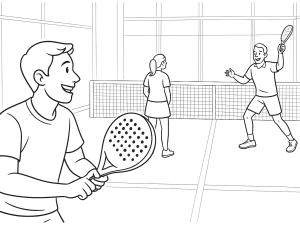
Lidia and Hugo demonstrate how returning to the cross-court player makes the shot more challenging for the opponent and reduces their ability to attack effectively. The reviewer notes that, statistically, the cross-court player is less prepared and has less reaction time, making this a safer and more strategic option. Even if the return isn’t perfect, it disrupts the opponents’ rhythm and can create opportunities for your team to counterattack.
- Tip 2: Aim your return at the cross-court player to force movement and reduce their comfort.
- Key benefit: Decreases the likelihood of facing an aggressive volley or smash.
- Application: Works best when you can keep the ball low and force the cross-court player to defend.
This tactic is particularly effective in matches where the server’s partner is less agile or less experienced, giving your team a strategic edge from the very first shot.
Opening the court with advanced returns for competitive play
The third and most advanced tip involves opening the court by targeting high backhand volleys or playing subtly to the sides. This technique is commonly used at the professional level, as seen with players like Chingotto and Tapia. The idea is to use your return to force the opponent into uncomfortable positions, often by sending the ball high to their backhand volley or by opening up space in the center of the court.
The creator demonstrates that by playing a high, soft shot to the opponent’s backhand volley, you limit their ability to attack and often create a large gap in the middle of the court. This can be risky, as it requires precision and awareness of your partner’s positioning, but when executed well, it can completely disrupt the opponents’ formation and open up attacking opportunities for your team.
- Tip 3: Use high, subtle returns to the backhand volley or sides to open the court.
- Key benefit: Forces opponents out of position and creates space for your team to exploit.
- When to use: Most effective at higher competitive levels or when facing left-handed players on the backhand side.
This tactic is especially useful for advanced players or those competing in tournaments, as it mirrors strategies employed by top professionals to neutralize aggressive opponents and control the flow of the point.
Key takeaways and practical advice for match play
Throughout the video, the creator and guests reinforce the importance of adapting your return strategy based on the level of your opponents and the match situation. Beginners may find success with simple lobs, but as the level increases, disciplined low returns and strategic targeting become vital. The three-step system offers a clear progression:
- Start with safe, low returns against difficult serves.
- Progress to targeting the cross-court player to disrupt the opponents’ setup.
- Advance to opening the court with high, precise returns for maximum tactical impact.
By practicing these tips and observing how professionals like Chingotto, Tapia, Galán, and Coello apply them, players can systematically improve their returns and gain a competitive edge in matches. The channel encourages viewers to experiment with these strategies, track their effectiveness, and continue refining their technique for ongoing improvement on the padel court.