
Positioning in Padel: Master Court Coverage & Teamwork
Explore the essentials of padel positioning to improve your court coverage, support your partner, and anticipate opponents’ shots. This category provides actionable insights to help players of all levels optimize their tactical awareness and game sense.
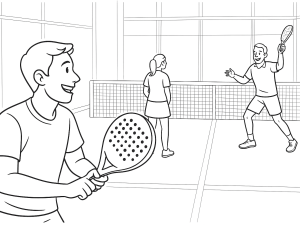
Understanding the fundamentals of padel positioning
Padel is a dynamic sport where effective positioning can make the difference between winning and losing points. Unlike tennis, padel is played in a smaller, enclosed court, which places a premium on spatial awareness, anticipation, and teamwork. Mastering positioning allows players to cover more ground efficiently, respond to opponents’ tactics, and support their partner throughout the match.
Key principles of optimal court positioning
- Covering the center: The middle of the court is often the most vulnerable area. Players should coordinate with their partner to ensure the center is well protected, especially during fast exchanges.
- Net vs. baseline: Deciding when to move forward to the net or stay back at the baseline depends on the situation. Generally, controlling the net offers more opportunities to attack, but players must be ready to retreat if lobbed.
- Partner synchronization: Effective communication and movement in tandem with your partner are crucial. Shifting laterally as a unit helps maintain balanced coverage and reduces open spaces.
- Anticipating opponents’ shots: Reading the game and predicting where the next shot will go enables players to position themselves proactively, rather than reactively.
Common positioning tactics in padel
- Side-by-side formation: Used mainly when defending at the baseline, this tactic allows both players to cover their respective sides and prepare for lobs or powerful groundstrokes.
- Staggered positioning: One player at the net and one at the baseline is common during transitions or when responding to lobs. This setup provides both offensive and defensive options.
- Net dominance: Both players positioned near the net can apply pressure on opponents, intercept volleys, and finish points quickly. However, this requires quick reflexes and excellent anticipation.
Adapting positioning to different game situations
Positioning is not static; it evolves with the flow of the match. Players must adjust their stance and location based on:
- The opponents’ playing style (aggressive vs. defensive)
- The score and match context (e.g., defending break points)
- Shot selection and ball trajectory
- Communication cues from their partner
For example, when facing opponents who frequently use lobs, players may position themselves slightly deeper to prevent being caught off guard. In contrast, against aggressive volleyers, maintaining a compact net presence can be more effective.
Supporting your partner through smart positioning
Padel is inherently a team sport. Supporting your partner through smart positioning involves:
- Backing up your partner when they are pulled out wide
- Switching sides seamlessly during fast rallies
- Covering gaps left by unexpected movements or errors
Constant communication—both verbal and non-verbal—helps maintain a cohesive defensive and offensive structure.
Developing anticipation and tactical awareness
Anticipation is a skill that grows with experience. By observing opponents’ body language, racket preparation, and shot tendencies, players can position themselves more effectively. Tactical awareness also involves recognizing patterns in play and adapting positioning strategies accordingly.
What this means for you
Mastering padel positioning is essential for players aiming to elevate their game. Whether you are a beginner learning the basics or an advanced player refining your tactics, understanding how to cover space, support your partner, and anticipate shots will lead to more consistent and successful performances on the court. Explore this category for comprehensive guides, drills, and expert analysis to sharpen your positioning and overall game sense.