Training with professionals in unique padel conditions
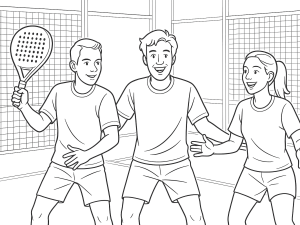
The latest episode from the4Set’s “Wings to Pro” series takes viewers into a distinctive training environment in Venezuela, where the creator joins professional padel players Jairo Bautista and Emilio Chamero. The session unfolds on an unusual court with a surface and rebound behavior that challenges even seasoned players. The reviewer notes the court’s fiberglass mesh and a carpet with almost no sand and an extremely short pile—just 1 mm—making for unpredictable bounces and a surface more reminiscent of a football pitch than a standard padel court.
Despite dealing with a recent injury and the added difficulty of strong coastal winds, the creator sets out to analyze and compare volley techniques with the pros. The team records slow-motion footage of forehand volleys, focusing on preparation, weight transfer, and timing. The reviewer admits to struggling with timing due to the injury, but the analysis highlights the small technical differences between amateur and professional execution.
Technical analysis of volley technique and common mistakes
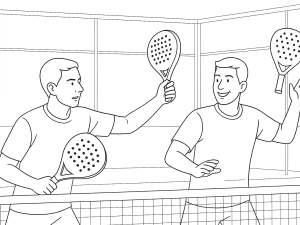
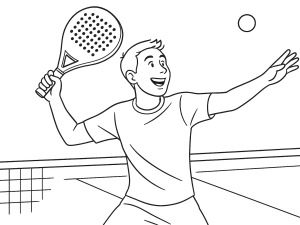
During the volley drills, the channel emphasizes several key technical points:
- Preparation: Opening the shoulder and lowering the body for stability
- Contact point: Striking the ball slightly in front for optimal control
- Weight transfer: Moving the body forward through the shot
- Follow-through: Keeping the racket head up and finishing with balance
The professionals demonstrate textbook technique, with short, controlled swings and precise footwork. The reviewer, by contrast, struggles with late contact points and inconsistent weight transfer, which he attributes to rustiness from injury and the challenging court conditions. The group discusses these differences openly, providing practical feedback on how to improve volley consistency and control, especially under less-than-ideal circumstances.
Volley defense challenge and tactical insights
To further test their skills, the group sets up a volley defense challenge. One player defends while the others attempt to force errors with aggressive volleys. The goal for the defender is to execute a perfect lob into the corners, despite the swirling wind and unpredictable bounces. The challenge quickly reveals how court surface and weather can impact shot selection and execution. Even the pros miss a few lobs, underscoring the importance of adaptability and focus.
This segment offers valuable tactical insights: when defending against pressure at the net, the ability to reset the point with a high, deep lob is crucial. The exercise also highlights the mental aspect of padel, as players joke about making excuses for missed shots—whether it’s the wind, the carpet, or the net. The reviewer’s honest self-critique and the professionals’ feedback create a relatable learning moment for viewers of all levels.
Padel meets football: penalty shootout with a professional goalkeeper
The episode shifts gears as the padel players take on a local professional football goalkeeper in a penalty shootout—using padel balls. Each participant takes three shots, testing their accuracy and the keeper’s reflexes. The goalkeeper predicts he can save at least five out of nine attempts, and the challenge quickly becomes a friendly competition among the group. The segment is lighthearted but demonstrates the crossover athleticism and coordination required in both sports.
While not directly related to padel technique, this crossover challenge adds entertainment value and showcases the camaraderie between athletes from different disciplines. It also offers a glimpse into the training environment at Ciudad Academia, where multi-sport facilities and unique challenges are part of daily life.
Drone challenge and long-distance shot experiment
Continuing the theme of creative training, the group attempts to hit a hovering drone with padel shots from a distance of 25–30 meters. The wind and altitude make the task especially difficult, and despite several close calls, the drone survives unscathed. The challenge tests not only shot power and accuracy but also the players’ ability to adapt to novel situations—an increasingly important skill in modern padel.
Later, the group moves to a football field for a long-distance shot contest, aiming to reach or score in a goal 108 meters away. The reviewer, still recovering from injury, participates alongside the pros, and the segment becomes a playful test of strength and technique. The wind provides some assistance, but no one manages to score, highlighting the difficulty of such feats even for skilled athletes.
Impressions of Kiki Padel and the Venezuelan padel scene
The episode concludes with a visit to Kiki Padel, home of the Paquito Navarro Academy—the first of its kind in Venezuela. With 10 outdoor courts just 150 meters from the sea, the club offers a unique setting for both training and social play. The reviewer praises the vibrant atmosphere, noting the presence of young fans and the club’s proximity to a beach club, where players can unwind after late-night matches.
The cost to play at Kiki Padel is around $20 per court, which the reviewer considers reasonable given the facilities and location. The club also hosts major events, including the Puerto Cabello Open, and features a permanent stadium court—a rarity outside of Europe. The reviewer observes that the Venezuelan padel audience skews younger than in Spain, with many teenagers in attendance, reflecting the sport’s growing popularity in the region.
Local culture and final ratings
Before wrapping up, the creator samples a local Venezuelan dish called a pepito, describing it as a hearty sandwich packed with a variety of fillings. He rates the pepito a 9.5 out of 10, reserving a perfect score for Spanish paella. This lighthearted moment adds a personal touch and connects the sporting journey with local culture.
- Pepito sandwich rating: 9.5/10 (according to the reviewer)
- Paella (for comparison): 10/10
Overall, the episode blends technical padel analysis with creative challenges and cultural exploration, offering viewers both practical insights and entertaining moments from the journey to becoming a professional padel player.