Why mental strength is a decisive factor in padel matches
The channel Mejora Tu Padel emphasizes that mental strength is often the difference between winning and losing in padel. While technical, tactical, and physical skills are essential, it’s the psychological aspect that frequently determines the outcome of close matches. The creator points out that many players have experienced matches where they seemed destined to win, only to lose due to lapses in focus or emotional control. This highlights the importance of developing a robust mental game alongside other skills.
According to the reviewer, the mental side of padel cannot be trained by someone else for you. Unlike physical preparation, which can be guided and measured, mental work is deeply personal and requires self-awareness and commitment. Players must take responsibility for their own mindset and emotional responses on court.
Managing internal dialogue and breaking negative loops
One of the most challenging aspects discussed is the management of internal dialogue. The reviewer explains that every player has an inner voice that can either motivate or undermine performance. Negative self-talk—what he calls “FM dirt”—can quickly spiral into a loop of frustration and self-doubt, especially after making mistakes.
To counteract this, the channel suggests actively shifting to a more positive internal dialogue—“FM positivism.” Recognizing when negative thoughts arise and consciously replacing them with constructive messages is crucial. The reviewer notes that most matches lost with bad feelings are the result of getting stuck in this negative loop, rather than a lack of skill or preparation.
Key benefits of mental training for padel players
Developing mental skills offers several tangible benefits for padel players. The reviewer highlights improvements in:
- Concentration: Enhanced focus during key moments and throughout the match
- Pressure management: Greater resilience in high-stakes situations
- Teamwork and communication: More effective interaction with partners, leading to better on-court performance
He stresses that mistakes are inevitable in every match—even top professionals like Chingotto make errors. What matters is how players respond to these mistakes and how much significance they attach to them, especially in crucial moments like break points or tie-breaks.
Building effective pre-match and in-game routines
The creator underscores the importance of routines before and during matches. Pre-match routines help players focus and transition into a competitive mindset, whether it’s a specific warm-up, meal, or mental preparation. These routines are highly individual—some players need to prepare the night before, while others ramp up just before the match.
In-game routines, such as taking a moment between points or following a set sequence of actions, help maintain composure and reset focus. The reviewer shares examples from professional players, like Álex Arroyo and Edu Alonso, who use specific gestures (e.g., touching the glass) as anchors to manage nerves and refocus during tense moments.
Utilizing anchors and visualization for peak performance
The concept of anchors—sensory cues that trigger a desired mental state—is explored in detail. These can be tactile (touching the ball), auditory (listening to certain music), or even olfactory (smelling a familiar scent). Anchors help players quickly access a state of calm or focus, especially under pressure.
Visualization is another powerful tool. The reviewer encourages players to mentally rehearse success, imagining themselves executing shots and winning points. This technique, used by elite athletes across sports, helps build confidence and prepares the mind for real match situations.
Developing self-confidence and managing frustration
Self-confidence in padel is built through effective error management and realistic expectations. The channel reminds viewers that mistakes are a natural part of the game, and learning to accept and move past them is essential for long-term improvement. Frustration is inevitable, but it should be channeled into motivation rather than self-criticism.
The reviewer distinguishes between intrinsic and extrinsic motivation. Intrinsic motivation—driven by personal growth and the desire to improve—is more sustainable than relying on external rewards like trophies or recognition. Players who focus on being better than they were yesterday find greater fulfillment and resilience, regardless of match outcomes.
Effective communication and partner dynamics in padel
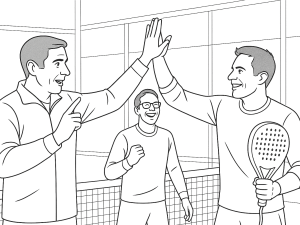
Padel is a team sport, and the relationship with one’s partner is crucial. The reviewer points out that many players blame their partners for losses, but often overlook their own role in the partnership’s dynamics. Good communication—both verbal and non-verbal—can significantly enhance performance. Simple gestures like eye contact or positive reinforcement after mistakes can make a big difference.
He references top players like Fernando Belasteguín and Alejandra Salazar, who are known for elevating their partners’ games through supportive communication and leadership. The goal is to help your partner perform at their best, as their success directly benefits the team.
Summary of key mental strategies for padel improvement
- Actively manage your internal dialogue to break negative thought patterns
- Establish personalized pre-match and in-game routines to maintain focus
- Use anchors and visualization techniques to access peak mental states
- Build self-confidence by accepting mistakes and focusing on intrinsic motivation
- Prioritize effective communication and support with your partner
The channel concludes that mental growth not only improves performance but also increases enjoyment of the game. By investing in psychological skills, padel players can unlock higher levels of play and satisfaction on the court.