Key differences between padel balls and tennis balls explained
The reviewer from Padel Smash Academy begins by clarifying a common point of confusion: the difference between padel balls and tennis balls. While they appear similar at first glance, padel balls are slightly smaller and have lower internal pressure than tennis balls. This lower pressure results in a bounce that is less lively, making the game more controlled and preventing players—especially professionals—from hitting the ball out of the court too easily. The channel notes that, historically, padel was played with tennis balls until official rules in the late 1990s introduced the dedicated padel ball to better suit the sport’s dynamics.
Another important distinction is that tennis balls, due to their higher pressure, bounce higher and move faster. This would make padel unplayable at the highest levels, as the ball would be too quick for the enclosed court. The reviewer emphasizes that these subtle changes in size and pressure are crucial for the unique feel and tactics of padel.
How weather, altitude, and court conditions affect padel ball performance
One of the standout insights from the video is how external conditions—such as weather, humidity, altitude, and even the court surface—significantly impact the behavior of padel balls. The reviewer explains that:
- Humidity makes balls heavier and “hairier,” reducing their liveliness and making it harder to generate power.
- Heat increases the bounce, especially when the glass walls of the court get hot, resulting in a livelier game.
- Cold conditions cause the ball to “die” off the glass, requiring players to adjust their positioning and timing.
- Altitude (e.g., in places like Las Vegas or Mexico City) makes balls fly faster and bounce higher, which is why special low-pressure balls are used in high-altitude tournaments.
These variables mean that even the same brand of ball can feel very different depending on where and when you play. The reviewer recommends testing balls by observing how they rebound off the back glass: if the ball bounces out quickly, it’s fast; if it dies, a faster ball may be needed.
Review and comparison of popular padel ball brands
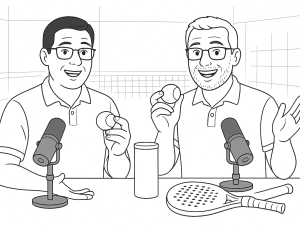
The core of the video is a hands-on review of several leading padel ball brands, each tested in real match conditions. The reviewer and co-host share their impressions, noting differences in speed, feel, and suitability for various playing styles and environments.
- Dunlop Pro Padel: A reliable, everyday ball with balanced characteristics. It performs well in most conditions but can become heavy and slow in humid weather. The reviewer considers it a “neutral” choice, ideal when court conditions are unknown.
- Slazenger: Known for its heritage in tennis, Slazenger’s padel ball is described as soft and slightly slower, providing good control and comfort. It’s favored for its feel and is especially suited for defensive play.
- Wilson: The “Portes Time 3” model is a medium-to-fast ball, harder than some competitors. It suits aggressive players who like to hit hard and is commonly used at Ultra Padel.
- Head Padel Pro: A staple in professional tournaments, this ball is slower and softer, making it easier to defend but harder to smash out of the court. It’s preferred by players who value control over raw speed.
- Babolat: Described as a fast, lively ball. It can be challenging to control for those not used to its speed, but it’s appreciated for indoor play or slower courts.
- Technifibre: The hardest and fastest ball in the test. It’s popular with players who enjoy powerful shots, though it can be tough to control on fast courts.
- SUX Neo: Noted for significant improvements over previous versions, this ball is medium-to-fast and has become a favorite for its balanced performance. It is used at several clubs and is praised for its playability.
The reviewer highlights that while all balls are generally good, subtle differences in pressure, felt, and construction can make a noticeable impact, especially for experienced players.
Personal top three padel balls from the reviewer’s tests
After extensive testing, the hosts share their personal top three padel balls, based on feel, performance, and adaptability to different conditions:
- SUX Neo
- Slazenger
- Dunlop Pro Padel
Another host’s favorites are SUX Neo, Slazenger, and Head Padel Pro. Both agree that Dunlop Pro Padel is a safe, neutral option when court conditions are unpredictable.
Durability and cost considerations for padel balls
The reviewer observes that, in the United States, it’s common for players to use a new can of balls for each match, discarding them after a single use. However, in Europe and Latin America, balls are often reused for multiple matches, and even sold second-hand. Most padel balls can last for two to three matches before losing their optimal bounce and feel, though this can be affected by weather and court conditions.
Regarding cost, the price of padel balls in the US typically ranges from $5.99 to $9.99 per can, with Dunlop Pro Padel often available for less if purchased by the case. The reviewer recommends buying in bulk to save money, especially for regular players. Clubs may charge a premium, so sourcing balls online or in bulk is a practical tip for those playing several times a week.
Choosing the right padel ball for your game and environment
The channel emphasizes that selecting the best padel ball is not just about brand preference but also about adapting to weather, altitude, court surface, and personal playing style. Fast balls with higher pressure are ideal for slow courts or humid conditions, while softer, slower balls suit fast courts or hot, dry environments. Most clubs already adjust their ball selection to local conditions, but experienced players will notice subtle differences and may adjust their choice accordingly.
Ultimately, the reviewer encourages players to experiment with different brands and models, paying attention to how each ball responds in their typical playing environment. With experience, players will develop a preference and better understand how to adapt their game to the ball in play.