Understanding the most common bandeja mistake on the side of the court
The creator from Mejora Tu Padel highlights a frequent error players make when executing the bandeja (tray shot) or topspin smash from the side area or near the fence. This mistake often occurs when players attempt to play the shot from a position where the angle is too tight, or when they fail to adapt their technique and tactics to the specific situation. The video focuses on identifying why this happens and how to correct it, especially for right-handed players operating from the backhand side.
Comparing the flat bandeja and the topspin smash in padel
The reviewer demonstrates two main options for the side-area overhead: the flat bandeja and the topspin (curler) smash. Each has distinct advantages and drawbacks, and the choice depends on both technical skill and tactical awareness.
- Flat bandeja: This shot, often associated with players like Fernando Belasteguín, involves a downward, controlled motion. Its main benefits are reliability and placement accuracy. Most players can execute it consistently, and it allows for safe play, especially when under pressure. However, at advanced levels, opponents can anticipate this shot, reducing its surprise effect and making it easier to defend.
- Topspin (curler) smash: Inspired by players like Agustín Tapia, this shot mimics a topspin tennis serve. Its primary advantage is the potential to disguise intentions—players can fake a smash, a curler, or a shot aimed at the opponent’s legs. This unpredictability can force opponents to hesitate or move prematurely. The downside is its technical difficulty: generating enough topspin to bring the ball down is challenging, and mistakes often result in the ball floating or bouncing too high, making it easy for the opponent to counterattack.
When to use each shot in the lateral and central zones
Choosing between the flat bandeja and the topspin smash depends heavily on court positioning. The creator emphasizes dividing the court into zones—especially distinguishing between the central area and the lateral (side) area near the fence. This division is crucial for making the right tactical decision.
For shots played from the side area (within 1.5 to 2 meters from the lateral wall), both the flat bandeja and the topspin smash can be effective. However, as the ball moves closer to the center of the court, the angle for a successful lateral shot narrows significantly. Attempting a topspin smash from the central area is risky and often leads to errors, as the ball is less likely to touch the side wall and more likely to be intercepted by the opponent.
The reviewer advises that players should only attempt the curler or lateral tray when the ball is clearly in the side zone. If the ball is more central, it’s better to opt for a safer, more conventional overhead or even let the ball pass to avoid a forced error.
Technical adjustments for better results on the side of the court
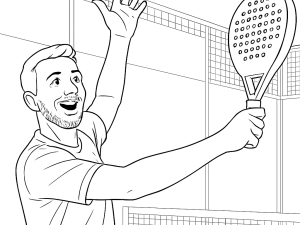
Executing the bandeja or topspin smash from the lateral area requires precise technique. The creator stresses the importance of making contact with the ball at a higher point, especially when near the fence. Dropping the ball too low or playing it late reduces control and increases the likelihood of missing the shot or sending it into the net.
When the ball comes from the opponent’s lob and lands near the side, maintaining a high contact point and a forward trajectory is essential. If the ball drifts toward the center, players must adjust by either playing a safer shot or reducing speed and increasing precision. The key is not to force a lateral shot when the angle isn’t there, as this often results in the ball missing the side wall and giving the opponent an easy opportunity to attack.
Tactical advice for avoiding opponent anticipation and blockages
One of the main tactical errors highlighted is becoming too predictable with shot selection. If the opponent knows that a player will always use the flat bandeja from the side, they can anticipate and cover the fence, limiting options. Mixing in the topspin smash or varying the direction and depth of the tray can keep opponents guessing and prevent them from blocking or countering effectively.
Additionally, the reviewer demonstrates how poor shot selection from the central area allows opponents to step in and volley easily. By recognizing when to attempt the lateral shot and when to play more conservatively, players can maintain control of the point and avoid giving away easy opportunities.
Key takeaways and practical recommendations for padel players
- Use the flat bandeja for reliability and placement, especially when under pressure or when the angle is limited.
- Reserve the topspin smash for situations where disguise and unpredictability are needed, but only attempt it from the lateral area with a clear angle.
- Divide the court mentally into zones to help decide which shot to use and avoid forcing difficult angles from the center.
- Maintain a high contact point on overheads near the fence to maximize control and minimize errors.
- Vary shot selection to prevent opponents from anticipating and blocking your attacks.
The creator’s analysis underscores the close relationship between technique and tactics in padel. By understanding when and how to use each shot, players can reduce errors and become more effective in both defensive and offensive situations on the court.