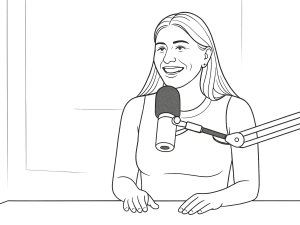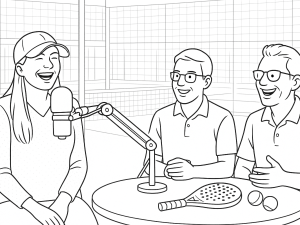
Andrea Samson’s early life and tennis background in Paraguay
The episode opens with Andrea Samson reflecting on her roots in Paraguay, where tennis was a family tradition. With her uncle representing Paraguay in the Davis Cup and both parents and siblings playing tennis, Andrea’s formative years revolved around the sport. She describes how tennis courts were always bustling, while the adjacent padel courts remained unused—a curiosity she only later understood. This strong tennis foundation shaped her competitive mindset and technical skills, but padel was not yet on her radar during her youth in Paraguay.
The move to the United States and discovering padel
Andrea’s journey to the United States was driven by her family’s pursuit of collegiate tennis opportunities. After her brother’s move to Miami for university tennis, the rest of the family followed, and Andrea continued her tennis career through high school and college. However, after college, she experienced burnout and stepped away from the sport, seeking a new outlet for her competitive energy. It was during this period that her brother, already active in the local padel community, encouraged her to try padel. Initially dismissive—viewing padel as an “old people’s sport”—Andrea eventually gave it a chance and was immediately hooked by the game’s unique dynamics and social atmosphere.
Transitioning from tennis to padel: challenges and breakthroughs
Andrea candidly discusses the difficulties of transitioning from tennis to padel. Despite her racket skills, she found herself losing matches and struggling with the tactical differences—especially the use of walls and the importance of patience over power. Her initial frustration led to a brief hiatus, but a tournament invitation reignited her competitive drive. Recognizing the need for proper training, she began taking lessons with coaches Anel and later Nico, who emphasized the strategic nuances of padel, such as positioning, shot selection, and teamwork. Andrea notes that her singles background in tennis made the adjustment to padel’s doubles format more challenging, requiring her to develop communication and adaptability with various partners.
Competing at the Panamerican Padel Games and making history
One of the highlights of Andrea’s padel career has been her participation in the Panamerican Padel Games in Cancun. She explains the tournament’s structure, which features divisions from second to sixth, with teams assigned based on skill level and previous results. Andrea competed in the second division for women, helping Team USA achieve a historic overall victory by accumulating the most points across all divisions. The U.S. women’s teams reached four finals and one semifinal out of six divisions, a testament to the rapid growth and depth of American padel. Andrea’s own performance included four matches, contributing valuable points to the team’s total of 152, edging out Argentina for the championship.
- USA women’s teams: Four finals, one semifinal in six divisions
- Andrea’s division: Second division, four matches played
- Total USA points: 152 (compared to Argentina’s 146)
She highlights the diversity of the U.S. squad, with players from various backgrounds—Paraguay, Puerto Rico, Argentina, Serbia, and Romania—reflecting the multicultural fabric of American padel.
International experiences: from the Vatican to the World Championships
Beyond the Panamerican Games, Andrea shares her unique experience as a “sports ambassador” in Italy through a U.S. State Department program. She led padel clinics for children with disabilities and vulnerable communities, emphasizing the universal language of sport. The trip included a visit to the Vatican, where she met the Pope and promoted padel as a tool for inclusion and diplomacy. This initiative marked the first time padel was featured in the program, highlighting the sport’s growing global reach.
Andrea also recounts competing at the World Padel Championships in Dubai, where she faced elite professionals such as Martita Ortega and Bea González. She acknowledges the significant gap in experience and tactical mastery between the U.S. team—largely composed of former tennis players—and the world’s top padel nations, whose athletes have trained in the sport since childhood. Despite the challenges, Andrea cherishes the opportunity to compete at the highest level and interact with her idols, including Agustín Tapia.
Balancing padel, work, and personal growth
While Andrea is deeply committed to padel, she balances her athletic pursuits with a full-time role at a sports marketing company. She describes how she has learned to manage her schedule to avoid burnout, focusing on quality training sessions, strength conditioning, and selective match play. Injuries and fatigue prompted her to prioritize recovery and physical preparation, which has improved her performance and longevity on the court.
Andrea is also passionate about growing women’s participation in padel. She has started offering lessons and clinics, aiming to inspire and mentor the next generation of female players. She notes the increasing investment and visibility in women’s sports, both in padel and beyond, and sees herself as an advocate for this movement.
Padel preferences, favorite gear, and future ambitions
During a rapid-fire segment, Andrea reveals her preferences and favorites within the sport:
- Preferred side: Right
- Indoor or outdoor: Outdoor
- Power vs. finesse: Prefers power but is learning finesse
- Favorite club: Real Padel, where she started
- Best shot: Vibora
- Weakest shot: Backhand volley (but improving)
- Favorite racket: Adidas Control (sponsored by Adidas)
- Favorite coach: Nico
- Top partners: Astred, Sophie (Panamerican partner)
Looking ahead, Andrea’s primary goal for 2024 is to become the number one padel player in the United States. She is also eager to join a Pro Padel League team, with a particular interest in the Orlando franchise owned by Daddy Yankee, citing the team’s energy and appeal.
Key takeaways from Andrea Samson’s journey
- Adaptability: Transitioning from tennis to padel requires patience, tactical learning, and embracing teamwork.
- Dedication: Consistent training, coaching, and match experience are crucial for rapid improvement.
- Community: The multicultural nature of U.S. padel is a strength, fostering growth and camaraderie.
- Inspiration: Andrea is committed to mentoring women and promoting padel’s inclusive spirit on and off the court.
- Ambition: Her sights are set on national leadership and continued international competition.
Andrea Samson’s story, as shared on Padel Smash Academy, exemplifies the passion, resilience, and vision driving the next generation of American padel players.