Understanding the “bote huevo” and its impact on padel rallies
The “bote huevo” is a term in padel that refers to a specific type of bounce where the ball, after hitting the ground, leaves at a noticeably low angle—specifically, less than 45º. According to the channel Padel Chiquito, this scenario often signals a problematic or “bad” ball, as the bounce does not behave as expected in standard play.
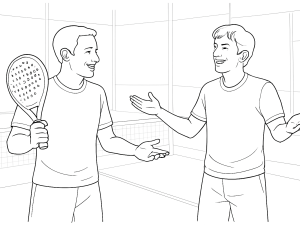
When the ball exits the bounce at such a shallow angle, it typically travels almost parallel to the ground. This can disrupt the flow of the rally and create confusion among players about whether the point should continue or be replayed. The creator emphasizes that recognizing this irregular bounce is crucial for maintaining fairness and clarity during matches.
Why a low-angle bounce is considered a fault
The channel explains that a ball leaving the ground at less than 45º is usually the result of a faulty contact—either with the court surface or due to an unusual spin or mishit. This type of bounce is not part of the natural dynamics expected in padel rallies. Instead, it suggests that the ball’s trajectory has been compromised, making it difficult for players to respond appropriately.
In practical terms, a ball that stays low after the bounce can be nearly impossible to return, especially if it skims along the court. This is why, in padel rules and etiquette, such a bounce is often classified as a “mala” or bad ball, and the point is typically stopped or replayed.
Visual cues and examples for identifying a “bote huevo”
To help players recognize this situation, the creator offers a clear visual example: imagine the ball bouncing and then traveling almost flat, barely rising off the court. This is in contrast to a normal bounce, where the ball would leave the ground at a steeper, more playable angle.
Spotting these low bounces quickly can prevent disputes and ensure that both teams agree on how to proceed. The channel suggests that if there is any doubt about the bounce, it is best to err on the side of fairness and replay the point.
Encouraging honesty and sportsmanship in padel
One of the key messages from Padel Chiquito is the importance of honesty when dealing with questionable bounces. The creator stresses that being upfront about a “bote huevo” or any ambiguous situation helps avoid unnecessary arguments and keeps the game enjoyable for everyone involved.
By prioritizing fair play and open communication, players can focus on improving their skills and enjoying the sport, rather than getting caught up in disputes over technicalities.
Key takeaways for handling irregular bounces in matches
- If the ball bounces and leaves the ground at an angle less than 45º, it is generally considered a bad ball.
- Such bounces often result from faulty contact or irregularities in the court surface.
- When in doubt, the most logical and fair solution is to replay the point.
- Honesty and clear communication help maintain a positive atmosphere on court.
Recognizing and addressing the “bote huevo” is a small but important part of padel etiquette, ensuring that matches are both fair and enjoyable for all players.