Alejandra Aguilar Martínez’s journey from tennis to padel success
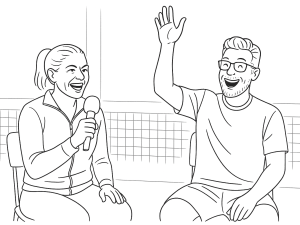
The interview with Alejandra Aguilar Martínez offers a compelling look at her transition from a distinguished tennis background to becoming a key player in the Pro Padel League (PPL) with the Cancun Waves. Alejandra began her padel journey just over a year and a half ago, initially joining the sport through a social invitation. Despite her limited experience, she quickly became captivated by padel’s unique dynamics, especially the challenge of playing off the walls—a stark contrast to her tennis roots.
Her competitive drive led her to seek stronger opponents outside her hometown of León, Mexico, where the women’s padel scene was still developing. Training and competing against higher-level players, often men, accelerated her growth. Alejandra’s story highlights how a tennis foundation can provide valuable skills, but mastering padel requires adaptation and a willingness to embrace new strategies and techniques.
Building a padel career: from coaching to the Pro Padel League
Alejandra’s athletic journey is marked by extensive experience in tennis, both as a player and coach. She played collegiate tennis at Armstrong Atlantic State University in Savannah, Georgia, and later served as a head coach at Liberty University in Virginia. Her coaching career continued in the United States, including stints in Naples, Florida, and St. Simon’s Island, Georgia, where she worked alongside renowned figures like Murphy Jensen.
Her entry into the Pro Padel League came through a last-minute draft opportunity with the Cancun Waves. Alejandra’s dual residency in Mexico and the U.S. made her an ideal candidate for the team. She describes the excitement and disbelief of being drafted, emphasizing the importance of seizing unexpected opportunities in a rapidly growing sport.
Insights into the Pro Padel League and team dynamics
The channel’s discussion with Alejandra sheds light on the evolving landscape of the PPL. She notes the increasing competitiveness of teams like the Houston Volts, Miami, and New York Atlantics, all of which are attracting top talent. Within the Cancun Waves, Alejandra has partnered primarily with Lisette Carrillo, a fellow tennis convert from Chiapas, Mexico. Their longstanding relationship has fostered strong on-court chemistry, crucial for success in high-stakes matches.
Alejandra also mentions other notable players expected to join the league, such as Ana Mari, Ana Cortiles, Juan Margañaraz, and Vero Virceda. The influx of skilled players is raising the league’s profile and driving up the level of competition.
Padel’s growth in Mexico and the United States
The creator and Alejandra discuss the rapid expansion of padel in both Mexico and the U.S. In Mexico, the sport’s popularity has surged in just two years, with more clubs and courts emerging as people try the game and become hooked. Alejandra believes the PPL is playing a pivotal role in introducing padel to new audiences and inspiring participation.
In the U.S., she admires the strategic approach to building padel infrastructure and sees tremendous potential for growth. She emphasizes that exposure—whether through watching professional matches or simply trying the sport—is key to padel’s continued rise.
Training philosophy and the importance of experience
Alejandra attributes much of her competitive edge to rigorous strength and conditioning training. While she humbly describes herself as “not the most skillful or finesse player,” her physical preparation allows her to compete effectively, especially in demanding tournament formats that include 10-point tiebreakers and the golden point rule.
She observes that many top players, particularly from countries like Argentina and Chile, may not appear physically imposing but possess extraordinary defensive skills and court awareness. Their ability to read the game, execute precise shots, and maintain composure under pressure is a testament to years—often decades—of experience. Alejandra echoes the sentiment that “hours on the court in competition and training” are essential, referencing the well-known 10,000-hour rule for mastery.
Personal preferences, strengths, and goals for the future
In a rapid-fire segment, Alejandra shares insights into her playing style and aspirations:
- Preferred side: Left (though currently playing right)
- Best shot: Backhand volley
- Shot to improve: The “borranchina” (twister/wall turn)
- Favorite partner: Lisette Carrillo
- Admired professionals: Jess Castelo, Bea Gonzalez, Agustin Tapia, Edu Alonso
- 2024 goals: Compete in the World Cup, play at the highest women’s categories in Mexico, and advance as a certified coach
Her commitment to continuous improvement is evident, both as a player and as a coach. Alejandra aspires to represent Mexico at the World Cup and to further her coaching credentials, aiming to contribute to the sport’s development on multiple fronts.
Key takeaways from Alejandra Aguilar Martínez’s padel perspective
- Tennis skills provide a strong foundation, but adapting to padel’s unique tactics and wall play is essential for success.
- Physical preparation and conditioning can compensate for a lack of experience or technical finesse, especially in high-pressure matches.
- Exposure to higher-level competition—even in defeat—accelerates growth and helps players identify areas for improvement.
- Padel’s growth depends on accessibility and visibility, with professional leagues and local clubs playing a crucial role in attracting new players.
- Long-term success comes from dedication—hours spent training and competing are irreplaceable for reaching elite levels.
Alejandra’s story, as shared on the Padel Smash Academy channel, is a testament to the sport’s inclusive spirit and the opportunities it offers for athletes willing to embrace new challenges and commit to continuous learning.