Key fundamentals of the backhand volley in padel
The backhand volley is a crucial shot in padel, allowing players to control the net and respond quickly to fast-paced exchanges. According to Padel Smash Academy, mastering this shot involves a sequence of technical steps that build both consistency and power. The channel breaks down the backhand volley into four essential stages, each contributing to a reliable and effective execution.
Step-by-step breakdown of the backhand volley technique
The reviewer emphasizes a clear, four-step approach to executing the backhand volley:
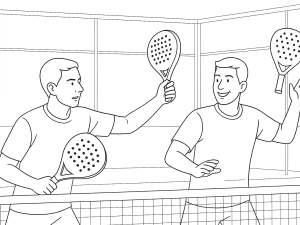
- Ready position: The player should stand with the racket held at nose height, ensuring quick access to both forehand and backhand volleys. The continental grip is recommended, providing versatility and control.
- Show the opposite side of the racket: As the ball approaches, rotate the upper body to present the opposite face of the racket. This coiling motion helps generate stability and prepares the arm for a controlled strike.
- Contact point in front: The ball should be struck in front of the body, not too close to the torso. This positioning allows for better leverage and ensures the shot is played with the correct trajectory and pace.
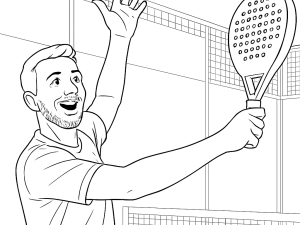
- Follow through: After making contact, the arm should continue its motion forward, guiding the ball and maintaining balance. The left hand comes off the racket and stretches backward, while the right foot steps forward to complete the movement.
Each step is demonstrated in the video, making it easy for viewers to visualize and replicate the technique during practice sessions.
Importance of body positioning and footwork
Padel Smash Academy highlights that effective body positioning is just as important as racket technique. Leaning the body forward and stepping into the shot with the right foot (for right-handed players) not only adds power but also helps maintain balance during fast exchanges at the net. The left arm’s backward extension acts as a counterbalance, preventing over-rotation and ensuring a stable base.
Proper footwork is essential for reaching the ideal contact point. The creator notes that stepping forward with the correct foot aligns the body and racket, allowing for a more controlled and powerful volley. This attention to detail separates a solid backhand volley from a rushed or off-balance shot.
Comparing backhand and forehand volley mechanics
The reviewer points out that the backhand volley shares many similarities with the forehand volley in padel. Both require a compact swing, early preparation, and a focus on meeting the ball in front of the body. However, the backhand volley often feels less natural for beginners, making it important to practice the specific sequence of movements described.
By following the same principles—ready position, showing the paddle face, precise contact point, and a smooth follow-through—players can develop a backhand volley that is just as reliable as their forehand. The channel suggests alternating between forehand and backhand volleys during drills to build muscle memory and confidence on both sides.
Practical training tips for improving your backhand volley
To help viewers integrate these fundamentals, the channel recommends short, focused practice sessions. Watching the demonstration of all four steps in motion can reinforce the correct technique. The creator encourages players to revisit the video and practice each step individually before combining them into a fluid motion.
For those looking to expand their padel skills further, Padel Smash Academy offers a playlist featuring 26 different padel shots, each demonstrated in under 30 seconds. This resource allows players to quickly review and practice a wide range of techniques, making it easier to build a comprehensive skill set.
Summary of the channel’s backhand volley ratings and insights
While the video does not provide a numerical rating for the backhand volley, the channel’s structured approach and clear demonstration highlight the shot’s importance in padel. The emphasis on ready position, continental grip, and precise footwork reflects the reviewer’s belief that mastering these fundamentals leads to a more effective and powerful backhand volley.
By following the step-by-step guidance from Padel Smash Academy, players at all levels can unlock greater power and control in their backhand volleys, ultimately improving their overall performance on the padel court.