Material selection and the importance of fibers and rubbers
The reviewer begins the factory tour at StarVie’s facility in Azuqueca de Henares, Madrid, focusing on the meticulous selection of materials that define the brand’s padel rackets. StarVie works with a diverse range of fibers, including basalt, fiberglass, colored carbon, and 3K carbon. Each material brings unique characteristics to the rackets. For example, basalt sits between fiberglass and carbon fiber in terms of hardness, offering a distinct playability that isn’t necessarily better or worse, but simply different. The colored carbon used in some models is composed of 85% carbon and 15% lurex (an aluminized, colored thread), resulting in a slightly softer feel than pure 3K carbon.
StarVie also carefully selects the weight and density of each material, understanding that even rackets with the same carbon type can vary in hardness and playability depending on the specific weight and layering. This attention to detail allows them to tailor rackets for different types of players, from those seeking more control to those prioritizing power or comfort.
Rubber types and their impact on racket performance
The channel highlights StarVie’s use of four main types of rubber, each contributing to the racket’s feel and performance:
- Dual rubber: A layered construction with soft rubber on the outside for better ball output at low speeds, and hard rubber inside for increased control and power when hitting harder.
- Pro V50: A hard rubber with a density of 50, ideal for players seeking a balance of control and attack.
- Soft 30: A medium-soft rubber, positioned as a middle ground rather than truly soft, offering a blend of comfort and responsiveness.
- Ultra Speed Soft (V28): The softest and fastest-recovering rubber, providing excellent ball output from the back of the court and a distinctive “drum-like” sound that many players enjoy.
All rubbers used by StarVie are sourced from France and are selected for their high recovery rates and certified quality. The reviewer notes that these rubbers quickly regain their shape, unlike lower-quality alternatives that may deform permanently. This focus on material quality is a key differentiator for StarVie rackets.
Manual production process and quality control
The production process at StarVie is described as highly manual and traditional, prioritizing quality over mass production. The process begins with the careful layering of fibers and rubber to create a “sandwich” structure, which is then molded and cured in an oven. Unlike some factories in Asia that use pre-impregnated (prepreg) fibers for cost efficiency, StarVie works with dry fiber and applies epoxy resin manually, ensuring greater control over the final product’s characteristics.
After molding, the rackets undergo several finishing steps:
- Deburring: Removing excess epoxy and cutting the racket to legal dimensions.
- Cleaning: Washing and sanding the faces to ensure paint and decals adhere properly, reducing warranty issues.
- Hammering: Filling holes and pores to create a perfectly smooth surface for painting and decoration.
- Painting, lacquering, and drying: Multiple cycles in drying rooms accelerate the process, reducing production time to 10–12 days per racket.
- Decoration and drilling: Applying decals and using CNC machines to drill holes according to each model’s specifications.
- Final assembly: Adding the cap, overgrip, and wrist rope, and preparing the racket for packaging.
The reviewer emphasizes that the weight listed on StarVie rackets excludes the wrist rope, ensuring accuracy for players who are particular about balance and feel.
Why StarVie favors 3K carbon and future material plans
The product manager explains that StarVie primarily uses 3K carbon because it delivers the playability the brand seeks. While the company has experimented with other carbons such as 12K (produced in Asia) and materials like aluminum and Texalium, their Spanish-made rackets have consistently featured 3K carbon. However, StarVie is actively working on adapting their production processes to accommodate other carbon types in the future, which could lead to new models with different characteristics.
Made in Spain: added value and manufacturing differences
The reviewer and StarVie representatives discuss the advantages of manufacturing in Spain. Local production not only supports employment but also ensures rigorous quality control, as evidenced by StarVie’s ISO 9000 and ISO 14000 certifications. The brand sources fibers and rubbers from Europe and the United States, prioritizing certified materials for both performance and environmental responsibility.
One standout feature of Spanish manufacturing is the attention to surface roughness—a detail often neglected in Asian factories. StarVie considers this roughness essential for differentiating their rackets and enhancing spin potential. The overall result is a racket with greater durability and higher quality than many mass-produced alternatives.
Laboratory testing and quality assurance at StarVie
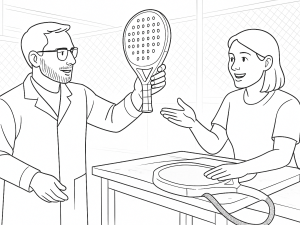
The tour concludes in StarVie’s on-site laboratory, where a product engineer demonstrates the rigorous testing each racket undergoes before reaching the market. The lab features machines capable of performing both compression and traction tests:
- Traction tests: Measure the maximum force required to break the wrist rope, ensuring player safety.
- Compression tests: Simulate impacts and repeated use, tracking deformation and material fatigue over time.
These tests are performed at various stages of production, allowing engineers to monitor how the racket’s behavior evolves. The reviewer notes that the forces applied in these tests far exceed what any player could generate on court, underscoring the robustness and reliability of StarVie rackets.
Upcoming reviews and final impressions from the channel
After the factory visit, the reviewer shares that he has received all three models of the 2024 StarVie Triton for further testing, responding to high demand from his audience. He promises a comparative review of these models in the near future, aiming to provide detailed feedback for players considering the Triton range.
The channel concludes by expressing appreciation for StarVie’s transparency and commitment to quality, highlighting the brand’s ongoing efforts to innovate while maintaining the craftsmanship and standards that define “Made in Spain” padel rackets.