Players reveal their most reliable winning shots at the Pala Padel di Nola open
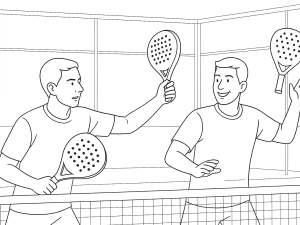
The creator’s visit to the Pala Padel di Nola during an open tournament uncovers the playful yet honest dynamics between padel partners. Across several interviews, players are challenged to identify the shot their partner executes with near-guaranteed success. The responses highlight a mix of classic padel weapons and individual specialties.
For example, Michele Pesce is praised by his partner for his per tre (overhead smash out of the court), described as a shot that “almost always results in a point.” Meanwhile, his partner’s most reliable move is the forehand volley into the grating, a quirky but effective play that catches opponents off guard.
Other duos echo similar sentiments. Marco Lazo and Kevin point to the per quattro and the smash as their respective point-winners, while Roberta Liberti and Giorgia Ianaro showcase a formidable forehand wall exit and a mathematically precise chic to the grating. These exchanges reveal not only technical strengths but also the mutual trust and inside jokes that define padel partnerships.
Honest admissions: shots most likely to lose the point
After celebrating their partners’ strengths, the creator pivots to a more challenging question: which shot do you dread seeing your partner attempt? The answers are candid, often delivered with humor but underscored by a desire for improvement.
Common culprits include the wall exit that goes awry, the stop volley on the backhand, and the infamous volley into the glass. For instance, Michele’s partner admits that his wall exit “always ends up against the back glass,” while Marco’s partner points to the vivora (side-spin volley) as a shot that can either soar or fail spectacularly.
These admissions are not just playful banter—they reflect the technical challenges that even experienced players face. The recurring mention of the bandeca (defensive overhead) and the smash as risky shots highlights how padel’s unique court and glass elements test consistency under pressure.
Women’s duo stands out in the open draw
Among the participants, Roberta Liberti and Giorgia Ianaro distinguish themselves by entering the open category, traditionally dominated by men. Their performance is impressive—they advance through the group stage and prepare for the quarterfinals, demonstrating that technical skill and tactical awareness can bridge physical differences.
Roberta credits Giorgia’s forehand wall exit as a “formidable” shot that consistently surprises opponents. In turn, Giorgia highlights Roberta’s chic to the grating as a mathematically precise play. Their mutual respect and strategic approach exemplify the evolving landscape of padel, where mixed and women’s teams are increasingly competitive in open formats.
Comparisons between tennis and padel techniques
The interviews also touch on the transition from tennis to padel, particularly with players like Giuseppe Federico, a former tennis player. His partner notes that Giuseppe’s comfortable vibora is a reliable weapon, while Giuseppe praises his partner’s smash for three or four as “always a winner.”
However, the adaptation isn’t always seamless. Tennis habits can lead to risky plays, such as the long-line drop shot that doesn’t always pay off in padel’s tighter dimensions. This insight underscores the importance of adjusting shot selection and positioning when switching sports.
Recurring themes: smash, vibora, and volley as decisive shots
Across all interviews, certain shots repeatedly emerge as game-changers:
- Smash (per tre/per quattro): Frequently cited as the most decisive shot, especially when executed with power and precision.
- Vibora: A side-spin volley that, when controlled, can open up the court or finish points outright.
- Volley (especially forehand): Both a source of points and, when mishit, a liability—particularly when directed into the glass or grating.
These preferences reflect the core skills that separate advanced padel players from casual enthusiasts. The ability to consistently execute these shots under pressure is often what determines match outcomes.
Humor and camaraderie as essential elements of padel culture
Throughout the video, the creator’s “domande cattive” (tricky questions) foster an atmosphere of lighthearted honesty. Players are quick to tease each other about their weaknesses, but the underlying respect and camaraderie are always evident. This playful dynamic is a hallmark of padel’s social culture, where improvement and enjoyment go hand in hand.
In summary, the tournament at Pala Padel di Nola offers a snapshot of the technical and personal dynamics that make padel unique. From signature shots to recurring errors, and from mixed-gender breakthroughs to tennis-to-padel transitions, the players’ stories provide both entertainment and insight for anyone passionate about the sport.