Common communication mistakes in padel doubles play
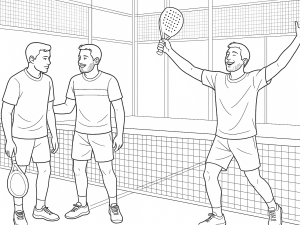
The channel Mejora Tu Padel highlights that one of the most frequent errors among amateur and even experienced padel players is poor communication with their partner. The reviewer emphasizes that padel is fundamentally a team sport, and clear, proactive communication can be the difference between winning and losing close matches. Many players, especially in tense moments, fail to inform their partner about their intentions, leading to confusion and missed opportunities on court.
For example, not announcing the direction of a serve or failing to coordinate coverage after a lob can leave gaps in defense or result in both players moving to the same area. These lapses are often subtle but have a significant impact on match outcomes.
Effective communication during the serve and return
One of the first scenarios discussed is the serve. The reviewer demonstrates how simply stating where you intend to serve—such as “I’m serving to the right side”—allows your partner to anticipate the play, adjust their position, and cover the most likely return angles. This is especially important when using different formations, like the Australian, where roles and coverage can change quickly.
By sharing information before serving, both players can agree on who covers the center and who takes the parallel, reducing the chances of being caught off guard. The reviewer notes that even professionals use these basic cues to maintain order and tactical clarity during points.
Making quick decisions and reducing on-court stress
The creator draws a parallel between padel and everyday decision-making, noting that the brain can become overloaded if too many choices are left undecided in the heat of the moment. By communicating intentions early—such as who will take a lob or which player will cover the net—partners can act confidently and avoid hesitation.
This proactive approach helps players stay focused on execution rather than scrambling to react, especially during fast exchanges or when under pressure from opponents.
Role of the non-hitting player: being the eyes and voice
Another key point is the responsibility of the player who is not directly hitting the ball. The reviewer explains that this player should constantly observe the opponents and provide real-time information to their partner. For example, after a lob, the non-hitting player should quickly assess whether both opponents have moved forward or stayed back, and communicate this clearly—using cues like “backhand up” or “both up.”
This information allows the player about to hit an overhead or defensive shot to make better decisions, such as whether to play a deep tray, a lob, or a controlled shot to recover the net. The reviewer prefers using simple, unambiguous terms like “backhand” or “up right” instead of “yours” or “mine,” which can be confusing, especially when facing new opponents in each match.
Practical examples of in-game communication
The channel provides several practical examples of how communication can be structured during live play:
- Announcing the serve direction: “Serving to the right.”
- Calling for a lob: “I go, I go, I go!” or “I don’t reach, come!”
- Identifying opponent positions: “Backhand up,” “both up,” or “back right.”
- Suggesting tactical plays: “Play it cross,” or “recover the net.”
These concise messages help partners stay synchronized and react to evolving situations. The reviewer stresses that the non-hitting player should act as the “eyes” for their teammate, especially during overheads or defensive transitions, since the hitter’s focus is on the ball.
Transitioning from net to defense: staying connected
During transitions—such as when defending against a lob or moving from the net to the baseline—the reviewer points out that communication is even more critical. If one player is forced back by a lob, the partner should move with them and provide updates on the opponents’ positions. This prevents situations where one player is left isolated or “sold” at the net, making it easier to defend or counterattack as a unit.
For beginners, the reviewer recommends staying in a “transition zone” rather than retreating all the way to the baseline, making it easier to support the partner and recover the net together. Quick, clear calls like “come, come, come” signal when help is needed or when the situation becomes complicated.
Adapting communication styles to different partners
The reviewer acknowledges that communication preferences can vary. Some players use “yours” and “mine,” while others prefer specific cues like “backhand” or “up right.” The key is to agree on a system before the match and keep it as simple as possible, especially in amateur or league play where partners may change frequently.
At higher levels, communication can become more nuanced and even non-verbal, but for most players, clarity and consistency are more important than complexity.
Summary of key communication strategies for padel doubles
- Announce serve direction and coverage before each point.
- Use simple, specific cues to indicate opponent positions and tactical intentions.
- Non-hitting player should observe opponents and provide real-time updates.
- Stay connected during transitions and avoid leaving your partner isolated.
- Agree on a communication system with your partner before matches, and keep it consistent.
By following these strategies, players can minimize confusion, anticipate plays more effectively, and increase their chances of winning tight matches. The channel encourages viewers to reflect on their own communication habits and experiment with these tips to see immediate improvements on the court.