Maria Magraner’s journey from tennis in Spain to padel stardom in the US
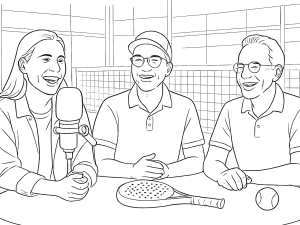
The episode from Padel Smash Academy spotlights Maria Magraner, a rapidly rising figure in American padel. Originally from Valencia, Spain, Maria’s sporting roots were firmly planted in tennis. She earned a scholarship to play collegiate tennis at Indiana University of Pennsylvania, where she also completed a degree in biomedicine. Despite growing up in Spain—a country with a rich padel tradition—Maria only discovered the sport after moving to Miami in 2021.
Her introduction to padel was casual, joining friends for recreational matches as the sport began to gain traction in Florida. The climate and growing community made Miami an ideal entry point. Initially, Maria played in local club tournaments, but her competitive instincts soon took over, setting the stage for a remarkable transformation.
The pivotal role of the Pro Padel League draft in Maria’s career
Maria’s leap into professional padel was catalyzed by the launch of the Pro Padel League (PPL) in the United States. She stumbled upon the league’s draft announcement on Instagram and, encouraged by friends, decided to apply. Despite limited competitive experience at the time, she was drafted by the Toronto team. Although she didn’t get court time during the league’s inaugural season, the experience proved transformative. Practicing alongside top players and missing out on match play ignited her determination to pursue padel at a higher level.
This turning point led Maria back to Spain, where she committed to intensive training at the Belmont Academy in Valencia. Her regimen included two hours of padel practice and one hour of conditioning, four times a week. This structured approach marked the true beginning of her padel career, shifting her focus from tennis to mastering the nuances of the new sport.
Technical challenges in transitioning from tennis to padel
Maria openly discussed the difficulties of adapting her tennis skills to padel. The most significant challenge was learning to use the glass walls—a fundamental aspect of padel but foreign to tennis players. Initially, she relied on her tennis instincts, hitting balls before they touched the wall and avoiding glass play. Her coaches at Belmont Academy forced her to confront this weakness, even running drills where she could only hit balls after they rebounded off the glass. This uncomfortable but necessary adjustment expanded her tactical awareness and improved her timing.
Other technical hurdles included mastering the bandeja and vibora—shots unique to padel. While her tennis background gave her a natural smash and solid volleys, she had to learn to slow down and use touch, especially with shots like the bandeja that demand finesse rather than power. Maria acknowledged that tennis players often try to hit too hard, and learning to vary pace and use the walls was essential for her development.
Current partnerships, equipment, and the search for sponsorship
Maria currently partners with Anna Giles, another top-10 US female padel player. Their partnership is official, and they are actively seeking sponsors for the upcoming season. Maria is supported by Wilson for equipment, receiving rackets, clothing, and bags. However, she highlighted the challenges of securing broader sponsorship in the US, noting that even top players struggle to cover travel and tournament expenses through prize money alone.
- Equipment sponsor: Wilson
- Current partner: Anna Giles
- Average tournaments per year: 15–20 (but not all are played due to costs)
- Estimated travel cost per tournament: $500 or more
Maria emphasized that most professional padel players in the US cannot make a living solely from the sport. Sponsorships are crucial, especially for covering travel, accommodation, and other expenses. She called for brands and businesses to invest in the growing US padel scene, particularly to support women’s development in the sport.
Insights into the Pro Padel League and international competition
The Pro Padel League is evolving rapidly, attracting international talent from Europe and the World Padel Tour. Maria explained that each team must have at least one American player, with the remaining slots open to international competitors. This structure creates fierce competition for roster spots, especially for non-citizen players like Maria, who must compete against established international stars for limited positions.
Despite these challenges, Maria remains optimistic and adaptable. She is a free agent for the upcoming draft and values team culture and leadership as much as on-court opportunities. Her collegiate tennis experience taught her the importance of team dynamics, which she now seeks in her padel career.
Strategic shift from left to right side and its impact on her game
Initially, Maria played on the left side, leveraging her aggressive smash from tennis. However, as her game matured, she realized that playing on the right allowed her to better support her partner and develop a more strategic approach. The switch, suggested by her coach and partner at Belmont Academy, was challenging but ultimately made her a more complete player. She now appreciates the tactical demands of the right side and feels it suits her strengths and the team’s needs.
This transition also reinforced the importance of adaptability in padel. Maria’s willingness to embrace new roles and refine her skills has been central to her rapid rise in the rankings.
Maria Magraner’s key strengths, areas for growth, and rapid-fire preferences
- Best shot: Backhand volley down the line
- Favorite racket: Wilson Bela
- Favorite professional player: Not specified
- Golden point strategy: Prefers to let her partner take it
- Weakest shot: Bandeja (still improving)
- Favorite trick shot: Drop shot to the fence
- Preferred sport now: Padel over tennis
- Favorite partner: Anna Giles
Maria’s journey is defined by her relentless drive, adaptability, and commitment to continuous improvement. Her story offers valuable insights for aspiring players transitioning from tennis to padel and highlights the challenges and opportunities in the evolving US padel landscape.