How to build a professional homemade ball pressurizer for over 50 balls
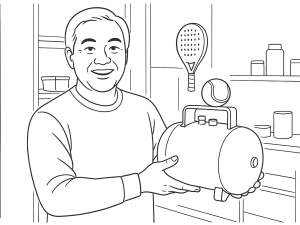
The reviewer from El chini consejo explores a unique approach to ball maintenance: creating a professional-grade, homemade pressurizer capable of holding more than 50 padel or tennis balls at once. Unlike commercial options designed for three or four balls, this solution uses a modified expansion vessel—a component typically found in water pressure systems. The channel highlights two versions: a 20-liter and a 24-liter model, both adapted for ball pressurization.
Key to this DIY project is selecting the right expansion vessel. Not all vessels are suitable; the most important feature is a wide mouth opening—wide enough to fit a padel or tennis ball. The reviewer warns that choosing a vessel with a narrow opening will render the project useless, as balls simply won’t fit inside. Additionally, the vessel must have a valve at the base for injecting air, which is standard on most expansion vessels but should be confirmed before purchase.
Step-by-step conversion of an expansion vessel into a ball pressurizer
Once the correct vessel is acquired, the internal rubber bladder (or “camera”) must be removed. The reviewer demonstrates that this bladder is shaped to fit the cylinder and needs to be cut, leaving a small rim to serve as a gasket. This ensures a proper seal when the lid is closed, preventing air from escaping during pressurization.
To finish the conversion, a one-inch cap is required to seal the vessel. If a pressure gauge (manometer) is desired, an adapter is necessary, as most gauges use a quarter-inch thread. The reviewer recommends using PTFE tape on all threaded connections to prevent leaks. For convenience, hand-tightened caps are available online and are much easier to use than traditional bolt-on lids, which require a wrench for every opening and closing.
- Capacity: 20L or 24L (holds 50–60 balls)
- Required features: Wide mouth, base valve for air, removable internal bladder
- Closure: One-inch cap or hand-tightened lid
- Optional: Pressure gauge with appropriate adapters
Cost comparison with commercial pressurizers
One of the standout advantages, according to the reviewer, is the cost-effectiveness of this homemade solution. The total investment is usually under €100, even when purchasing a ready-made vessel. In contrast, commercial options like the Pascal Box 72 (which holds 72 balls) can cost upwards of €800. The reviewer notes that even if you buy all the components separately, the total cost is similar to buying a pre-assembled version, so the time and effort saved may justify choosing a ready-made product.
For those who want to add a pressure gauge, the price may rise to around €80, but this still represents a significant saving compared to large-capacity commercial alternatives.
Strengths of the homemade pressurizer for coaches and clubs
The reviewer highlights several advantages of this homemade pressurizer, especially for coaches or clubs managing large quantities of balls. The ability to restore pressure to 50–60 balls at once is invaluable for group training sessions or lessons, where ball turnover is high. The low cost and ease of assembly (especially if purchased pre-made) make it accessible for most padel professionals.
Another benefit is the flexibility to customize the vessel with features like a hand-tightened cap or pressure gauge, depending on user preference and budget.
Main drawbacks and practical limitations of the design
Despite its strengths, the reviewer points out several notable drawbacks. First, the vessel is completely opaque, making it impossible to see the balls inside. This becomes a problem when some balls are already worn out or “flattened.” If a ball is overused and loses its shape under pressure, it may not recover properly, leading to inconsistent bounce and playability. Without a transparent window, users cannot easily identify and remove these defective balls.
Another issue is the mouth size. While wide enough for balls and a hand, the reviewer finds that repeatedly reaching in and out can be uncomfortable, especially for those with larger hands. The edges can cause minor discomfort after frequent use.
Finally, the traditional bolt-on cap can be inconvenient, requiring a wrench for every opening and closing. The reviewer strongly recommends upgrading to a hand-tightened cap for regular use.
When this large-capacity pressurizer makes sense
The reviewer concludes that this homemade pressurizer is an excellent investment for coaches or anyone who regularly manages a large number of balls. For typical players who only use three or four balls at a time, a smaller commercial pressurizer may be more practical. However, for professionals, the ability to keep dozens of balls pressurized and ready for play is a major advantage.
It’s important to note that while restoring pressure is crucial for ball longevity and performance, other factors also affect playability and injury prevention. The reviewer hints at future content covering these additional considerations.
Summary of reviewer’s ratings and recommendations
- Price–performance: Very high for large quantities (under €100 for 50–60 balls)
- Ease of use: Good if using a hand-tightened cap; less convenient with bolt-on lid
- Visibility: Poor (cannot see inside, which can hide defective balls)
- Suitability for coaches/clubs: Excellent
- Suitability for casual players: Less practical; smaller pressurizers recommended
Overall, the channel’s verdict is clear: for those who need to maintain a large stock of balls, this homemade pressurizer is a highly effective and economical solution, despite a few minor ergonomic and visibility drawbacks.