Breaking down stupa’s signature rulo: technique and tactical insights
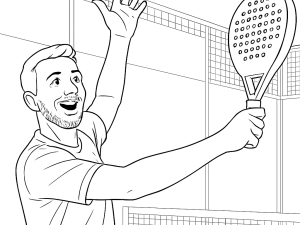
The channel begins by spotlighting Franco Stupaczuk’s iconic “rulo”, a shot that has become synonymous with his style on the Premier Padel circuit. The rulo is described as a high, curling overhead played with a distinct brushing motion. According to the reviewer, the key to executing this shot is to imagine a clock face and strike the ball at the “12 o’clock” position, well above head height. Stupaczuk emphasizes the importance of flexing the legs and positioning the body squarely toward the opponent’s fence, allowing for a strong upward and diagonal brushing action over the ball.
One of the most critical details is the grip. While many recommend a standard continental grip, Stupaczuk reveals he holds the racket slightly more open, similar to the grip used for a “por tres” shot. This adjustment allows him to generate maximum spin and control, especially when aiming for the far corner of the court. The reviewer notes that Stupaczuk often lets the ball pass slightly behind his body and uses a small jump backward to create space and time, particularly when facing fast lobs or diagonal shots. This movement enables a quick transition back to the net after executing the rulo.
- Contact point: Slightly behind the head, at maximum reach
- Grip: Continental, but with a more open angle for extra spin
- Body movement: Small jump backward, finishing forward for net recovery
Strategically, Stupaczuk’s rulo is not just about power or spin—it’s about reading the opponent. He explains that the true skill lies in varying the target based on the rival’s position, using peripheral vision and partner communication to avoid predictability. The reviewer highlights this as a hallmark of top-level padel: the ability to adapt the shot’s direction and speed in real time, making it difficult for opponents to anticipate or counterattack.
Mastering alejandra alonso’s flat bandeja: fundamentals and execution
The tutorial then shifts focus to Alejandra Alonso’s renowned flat bandeja, a staple in her game and a contrasting option to the rulo. The reviewer notes that Alonso’s bandeja is typically used against “pinched” or lower lobs, where executing a rulo would be more challenging. Alonso’s approach is to take the ball as high as possible, maintaining a close racket-to-ball distance, and striking at the ball’s highest point for a crisp, flat contact.
Her grip remains classic continental, without the adjustments seen in Stupaczuk’s rulo. The channel emphasizes the importance of shoulder rotation during the swing: failing to rotate the shoulders can cause the ball to drop or lose direction. Alonso’s strength lies in her ability to disguise the shot, alternating between a fast, aggressive flat bandeja and a more controlled version, keeping opponents guessing and off balance.
- Contact point: At the highest possible reach, close to the body
- Grip: Standard continental
- Shoulder action: Strong rotation for stability and direction
Alonso’s bandeja is less about outright attack and more about maintaining net position and controlling the rally. The reviewer points out that her ability to play the shot deep or short, depending on the opponent’s court position, demonstrates advanced tactical awareness. This adaptability is what makes her bandeja so effective at the professional level.
Comparing the rulo and flat bandeja: situational choices and player adaptation
Throughout the session, the channel draws clear distinctions between the rulo and the flat bandeja, highlighting when and why each shot is chosen. Stupaczuk’s rulo is described as a more offensive option, often aimed at winning the point outright or forcing a weak return. In contrast, Alonso’s flat bandeja is portrayed as a reliable, less risky shot, ideal for sustaining net dominance and waiting for a better attacking opportunity.
The reviewer underscores that both players adjust their shot selection based on the type of lob received and the opponent’s positioning. For example, a fast, deep lob might prompt Stupaczuk to use his rulo, while a slower, lower lob is better suited for Alonso’s flat bandeja. This decision-making process is a testament to their experience and ability to read the game.
- Rulo: Used for high, fast lobs; aims for angles and spin; offensive intent
- Flat bandeja: Used for lower, slower lobs; prioritizes control and net retention
- Adaptation: Both players vary placement and speed based on opponent movement
This nuanced understanding of shot selection is what separates elite players from the rest, as highlighted by the channel’s analysis.
Common mistakes and practical corrections during live drills
The video includes a practical segment where the reviewer attempts both the rulo and flat bandeja under the guidance of Stupaczuk and Alonso. Several common mistakes are addressed:
- For the rulo: Hitting too flat or too downward, resulting in a lack of spin or trajectory
- For the bandeja: Striking with slice or side spin instead of a true flat contact, causing inconsistency
- General: Over-rotating the wrist or failing to maintain proper shoulder alignment
Both professionals provide real-time feedback, emphasizing the need to “aim for the fence without fear” on the rulo and to “keep the racket face flat” on the bandeja. The reviewer’s attempts highlight how subtle changes in grip, contact point, and swing path can dramatically affect the outcome of each shot.
These corrections are valuable for intermediate and advanced players looking to refine their overhead game, as they address technical details often overlooked in standard coaching.
Key takeaways from the4set’s tutorial with stupa and ale
- Stupaczuk’s rulo: Demands precise timing, a slightly open grip, and the ability to adjust angle and spin based on opponent positioning.
- Alonso’s flat bandeja: Relies on high contact point, classic grip, and strong shoulder rotation for consistent, controlled execution.
- Shot selection: Both shots are situational, with elite players adapting their choice to the type of lob and rival’s court position.
- Technical corrections: Small adjustments in grip, swing path, and body movement can significantly improve shot quality.
- Tactical intelligence: Peripheral vision, partner communication, and reading the opponent are as important as technical skill.
The channel’s breakdown offers a rare look into the thought process and technique behind two of the most admired overheads in professional padel, providing actionable insights for players eager to elevate their own game.