Oier Zuazua’s top three tips for a powerful backhand volley
The reviewer highlights Oier Zuazua as a true specialist of the backhand volley on the A1 Pádel circuit. In this segment, Oier shares his three most effective tips for mastering this crucial shot, focusing on both technique and tactical execution.
The first tip centers on the use of the non-dominant hand. Oier emphasizes that the non-dominant hand is not just for preparing the racket, but also for generating pressure and stability. By engaging the non-dominant hand during the preparation phase, players can achieve greater precision and power when releasing the dominant hand for the shot.
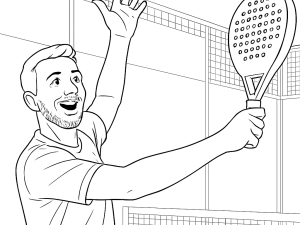
The second tip is about the racket’s preparation. Oier advises players to prepare the racket slightly higher, avoiding the common mistake of dropping the elbow and pulling the racket back in a tennis-like motion. Instead, he suggests keeping the racket frame close to the temple, allowing for a more compact and slightly downward swing. This technique helps the ball travel faster and with better control.
For his third tip, Oier recommends a “dry” finish for advanced players. While beginners are often taught to follow through with a long finish for control, Oier explains that a short, crisp finish is more effective at higher levels, especially with faster balls. This dry finish improves control and reduces rebound, making the volley both stronger and more difficult for opponents to return.
- Tip 1: Use the non-dominant hand for preparation and pressure
- Tip 2: Prepare the racket high, close to the temple, for a compact swing
- Tip 3: Employ a dry, short finish for advanced control and power
These tips are designed to help players of all levels refine their backhand volley, with a clear progression from foundational technique to advanced execution.
Analyzing tactical play during the tie-break demonstration
After sharing technical advice, the channel transitions to a tie-break demonstration, offering a practical look at how these backhand volley tips translate into match situations. The reviewer provides point-by-point commentary, highlighting both the tactical choices and execution of the players on court.
One of the standout moments involves a surprise volley lob, which catches the opponent off guard and shortens reaction time. This move, while risky, demonstrates the value of unpredictability and quick decision-making at the net. The reviewer notes that even when the execution isn’t perfect, smart positioning and anticipation can allow players to recover and regain control of the point.
Throughout the tie-break, Oier consistently applies his own advice: using the non-dominant hand for stability, maintaining a high racket preparation, and finishing his volleys with a compact motion. These habits help him maintain initiative and pressure, especially when facing aggressive returns or fast-paced exchanges at the net.
Key tactical lessons from the tie-break exchanges
The tie-break segment is rich with tactical insights, as the reviewer breaks down each point to reveal the underlying strategies. Several key themes emerge:
- Initiative at the net: Players who maintain the net position and dictate the pace are more likely to control the rally. Quick transitions and assertive volleys are essential for keeping opponents on the defensive.
- Angle creation and court positioning: By opening up angles or playing to the center, players can force their opponents out of position. However, the reviewer warns that opening angles can also give opponents more space to exploit, so timing and shot selection are crucial.
- Use of the lob: Well-timed lobs can neutralize net pressure and reset the point, but short or poorly executed lobs often lead to immediate counterattacks. The reviewer demonstrates how a good lob can buy time to recover the net, while a weak one invites aggressive smashes.
- Body targeting: Several points are won by directing volleys or smashes toward the opponent’s body, making it harder for them to defend or counterattack. This tactic is especially effective in fast exchanges.
These tactical lessons reinforce the importance of combining technical skill with smart decision-making during competitive play.
Practical adjustments for different skill levels
The channel makes a clear distinction between advice for beginners and advanced players. For those just starting out, a longer follow-through on the backhand volley is recommended to build control and consistency. As players progress, adopting a shorter, more explosive finish becomes advantageous, especially when facing faster balls or higher-level opponents.
This progression ensures that players develop a solid foundation before moving on to more advanced techniques. The reviewer encourages viewers to experiment with these adjustments and pay attention to how each change affects their control, power, and ability to keep the ball low and fast.
Summary of Oier Zuazua’s backhand volley technique and tactical approach
Oier Zuazua’s approach to the backhand volley combines technical precision with tactical intelligence. His emphasis on the non-dominant hand, high preparation, and dry finish provides a clear roadmap for players aiming to elevate their volley game. The tie-break analysis further illustrates how these elements come together in real match situations, highlighting the importance of initiative, angle management, and adaptability.
For padel enthusiasts looking to improve their backhand volley, these insights from the A1 Pádel circuit offer practical, actionable steps. Whether you’re a beginner refining your basics or an advanced player seeking more control and power, Oier’s tips and the reviewer’s tactical breakdown provide a valuable resource for on-court improvement.