Common mistakes in padel volleys highlighted by the channel
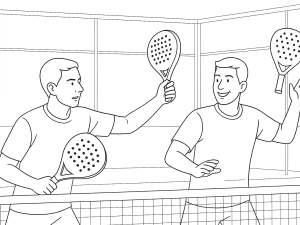
The creator from Mejora Tu Padel, joined by professional player David Fernández, breaks down five of the most frequent errors seen in padel volleys among intermediate players. Each mistake is explained with practical examples and actionable advice, making this review especially useful for those aiming to refine their net play.
Incorrect distance from the net and its tactical impact
One of the most prevalent errors is positioning too close or too far from the net. The channel emphasizes that the ideal distance is not fixed; it depends on several factors:
- The speed of the court
- The type of shot just played
- The position and intentions of the opponents
Many players assume that being as close as possible to the net guarantees better attacking options. However, the reviewer clarifies that this is not always true. For example, after playing a lob, you should stand farther from the net to be ready for a possible counter-lob. Conversely, after a winning shot, moving closer might be justified. The key takeaway is that net positioning must be dynamic and responsive to the evolving situation, not static or habitual.
Grip mistakes and their effect on volley control
Another common error is holding the racket incorrectly when approaching the net. The channel points out that many players grip the racket too high or too low, which significantly reduces their ability to react and control volleys. Beginners often use both hands or hold the racket by the throat, limiting fluidity and quick transitions.
For optimal performance, the reviewer recommends gripping the racket at the center, known as the “heart,” and releasing the non-dominant hand as you prepare to volley. This adjustment allows for a faster action-reaction cycle and greater control in fast exchanges. The creator notes that correcting this grip is one of the first steps in improving volley technique, with noticeable benefits in a player’s overall game.
Racket position: why holding it too low is a costly mistake
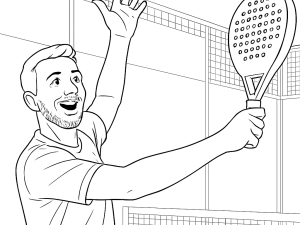
Holding the racket too low is a frequent issue, especially among players transitioning from tennis. The reviewer explains that when the racket is kept below waist level, it becomes nearly impossible to react in time to fast balls at the net. While a low racket might suffice when the ball is slow, it leaves players vulnerable against quick shots.
David Fernández demonstrates his preferred ready position: keeping the racket at chest height. This stance enables rapid responses both above and below the waist, facilitating blocks, drop shots, and attacking volleys. The channel encourages players to practice maintaining this position, as it leads to immediate improvements in volleying consistency and speed.
The importance of stopping at the right moment when moving to the net
Failing to stop at the correct moment while advancing to the net is another critical error. The channel identifies two main timing mistakes: not stopping at all, or stopping too early or too late. The ideal approach is to time your stop precisely as the opponent is about to strike the ball.
This timing allows you to be balanced and ready for any response, whether it’s a lob, a passing shot, or a fast volley. If you keep moving or stop at the wrong time, you risk being caught off guard, especially by lobs that exploit your momentum. The reviewer stresses that timing your stop is as important as your position on the court.
Following the ball’s trajectory to avoid leaving gaps
The final error discussed is failing to track the trajectory of your own shot when moving forward. For example, after hitting a cross-court lob, some players advance along the parallel, leaving their side exposed. The reviewer highlights that you should always follow the path of the ball you just played, moving in the same direction to cover the court effectively.
This adjustment prevents leaving open spaces that opponents can exploit and ensures better court coverage during transitions. The channel recommends making this a habit, especially after lobs or angled shots, to maintain a solid net presence.
Key takeaways and practical corrections for each mistake
- Distance from the net: Adjust your position based on the shot played and opponent’s likely response.
- Racket grip: Hold the racket at the heart, not too high or low, and release the non-dominant hand before volleying.
- Racket height: Keep the racket at chest level for quicker reactions to fast balls.
- Stopping at the net: Time your stop as the opponent hits, not before or after.
- Following the ball: Move in the direction of your shot to avoid leaving gaps in coverage.
By focusing on these corrections, players can quickly see improvements in their volleying effectiveness and overall net play. The channel’s practical demonstrations and clear explanations make these concepts accessible for players at all levels.