Key lessons from Gustavo Pratto Academy on volley technique
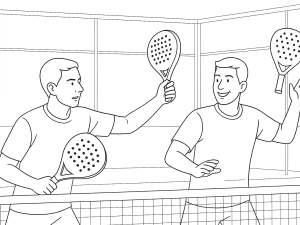
The reviewer visits the renowned Gustavo Pratto Academy, where Arturo Coello, the world’s top-ranked padel player, trains. The focus of the session is on refining volley technique, with an emphasis on practical adjustments that can make a significant difference for players at any level. The academy’s approach centers on using body movement and tactical awareness rather than relying solely on arm strength or guesswork.
One of the first corrections highlighted is the importance of body momentum during volleys. When moving forward to the net, the reviewer is advised to keep the preparation short and use the legs to generate power. This contrasts with standing still at the net, where the push should come primarily from the shoulders. Over-preparing the swing while advancing can lead to overhitting and a loss of control, as the body’s forward motion already provides much of the necessary force.
Decision making: reading the opponent and shot selection
A central theme throughout the training is the need to read the opponent’s position rather than guessing or pre-planning shots. The coach stresses that if the opponent steps back, a chiquita (a soft, low shot) is effective; if the opponent is close to the net, a lob is the better choice. This reactive approach ensures that the player always has options and keeps the opponent uncertain.
Exercises are designed to force quick decision-making, with the coach calling out instructions at the last possible moment. This simulates real match conditions where choices must be made based on the opponent’s actions, not on predetermined plans. The reviewer notes that this method prevents predictability and helps develop a more instinctive, adaptable game.
Technical adjustments for more effective volleys
Several technical tweaks are suggested to improve volley consistency and versatility:
- Short preparation: When advancing, keep the backswing minimal and let the legs drive the shot.
- Racket position: Lower the racket head for low balls, and maintain a neutral position to disguise both lobs and chiquitas.
- Flat shot preparation: For easy balls, prepare from above and strike down, rather than opening up the swing or adding unnecessary spin.
- Acceleration, not force: The difference between average and fast shots should come from acceleration, not from changing the technique or swinging harder.
These adjustments are intended to create a more controlled, reliable volley that can be adapted to different situations without sacrificing accuracy or deception.
Managing risk and controlling the rally
The reviewer is reminded that padel is not about hitting spectacular winners every time, but about minimizing errors and forcing the opponent to make mistakes. The coach emphasizes that players often fall into the trap of “training in fiction,” where they attempt risky shots and only remember the few that succeed. In reality, consistency and patience are more valuable than occasional brilliance.
Instead of going for direct winners on easy balls, the advice is to apply pressure and keep the rally going. If a player misses two easy shots, the opponent will target them relentlessly. By focusing on not giving away points, a player becomes much harder to beat, regardless of the opponent’s level.
Adapting strategy based on opponent and context
One of the most practical insights from the session is the importance of tailoring shot selection to the opponent’s abilities. For example, when lobbing against a shorter or less powerful player, there’s no need to aim for perfection or excessive depth. Simply placing the lob near the baseline is enough to maintain control and force errors.
This approach shifts the focus from trying to “win” every point outright to making the opponent work harder and increasing the likelihood that they will make mistakes. The reviewer is encouraged to make rallies last longer and to win points by doing the simplest, most effective thing, rather than always attempting the most impressive shot.
Building confidence and realistic expectations in training
The channel addresses the psychological side of improvement, noting that players often feel frustrated when they slow down and focus on control. This can create the illusion of playing worse, but in reality, it is a necessary step toward mastering the game. The reviewer is reminded that training with both stronger and weaker opponents is essential for developing dominance and consistency.
Ultimately, the message is clear: consistency, control, and adaptability are the foundations of a strong padel game. By embracing these principles, players can progress to any level they aspire to, without falling into the trap of prioritizing speed or power over precision and tactical awareness.
Summary of key improvements and takeaways from the session
- Use body movement and short preparation for volleys to maximize control and power.
- Read the opponent’s position before selecting a chiquita or lob, rather than guessing.
- Focus on consistency and minimizing errors instead of aiming for risky winners.
- Adjust technical details such as racket position and shot acceleration for more reliable volleys.
- Tailor shot depth and selection to the opponent’s abilities and match context.
- Accept that improvement may feel uncomfortable at first, but leads to better results in real matches.
The reviewer’s experience at Gustavo Pratto Academy offers actionable advice for players seeking to elevate their padel volley technique and overall tactical approach, emphasizing that smart, controlled play is the key to long-term success on the court.