The unique importance of the serve in padel and why it deserves focus
The creator from Mejora Tu Padel opens by emphasizing a key tactical truth: the serve is the only shot in padel where you have full control. Unlike other strokes, you decide when to hit, how to toss the ball, and where to direct your shot—without immediate interference from your opponent. This autonomy makes the serve a crucial moment that deserves careful thought and practice. Players often overlook its potential, but treating the serve as a strategic weapon can set the tone for the entire point.
Choosing direction and depth to maximize serve effectiveness
One of the central themes in the video is the importance of choosing both the direction and depth of your serve. The reviewer explains that serving to different areas—such as the right side or the T—affects not only your own positioning but also that of your partner. For example, serving wide to a right-handed opponent means your partner must be ready to cover the parallel, while you focus on the center. In contrast, a serve to the T shifts both players’ responsibilities and court coverage.
Coordination with your partner is highlighted as essential. Communicating your intended serve direction ensures that both players are prepared, minimizing confusion and maximizing defensive coverage. The reviewer stresses that if you surprise your partner by changing direction at the last second, you risk leaving gaps—especially through the center, which is often the easiest and most comfortable area for opponents to exploit.
Adapting serve depth to match opponents and conditions
Depth variation is another critical factor. The creator notes that serving deep so the ball bounces off the back glass gives you more time to approach the net, which can be valuable against aggressive returners. For example, against skilled players like Sanyo Gutiérrez, who can attack low balls with precision, a deeper serve can buy you precious seconds to establish your position.
However, the reviewer also suggests adjusting depth based on conditions. In colder weather or when the ball feels heavy, a shorter serve to the opponent’s right side can be more effective, especially if it forces a difficult lob. Wind is another variable; serving short into the wind makes it harder for opponents to execute an effective lob return. The key takeaway is to constantly analyze what’s working and be willing to alternate direction and depth to keep your serve unpredictable and effective.
Maximizing legal height for a more offensive serve
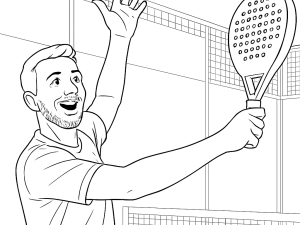
Padel rules limit the serve to contact below the waist, but the reviewer clarifies that the correct reference is the waist, not the hips. Many players miss out on potential power and angle by serving too low. The creator recommends using the maximum legal height for your serve to make it as offensive as possible.
He also discusses the importance of the ball’s bounce before contact. On some courts, especially those with uneven or hollow surfaces, the bounce can vary. In winter or on slow carpets, the ball may not bounce as high, reducing your options. The reviewer advises experimenting with how much you let the ball bounce before striking, as this can help you achieve a higher contact point and a more aggressive serve. He notes that, contrary to some outdated rules (such as those formerly in Argentina), bouncing the ball before serving is allowed and widely used by professionals.
Strategic positioning: where to serve from and how it shapes the point
Where you stand to serve is another subtle but impactful factor. The reviewer explains that moving closer to the side glass increases your angle to the side, making it easier to target the lateral wall. However, this positioning can leave the center less protected, so it’s a trade-off that requires awareness and adaptation. Most players serve from a range of 1.5 to 2 meters from the side glass, but top professionals like Paquito Navarro and Martín Di Nenno may vary their position to suit specific tactics or formations, such as the Australian formation.
The reviewer encourages experimenting with your serve position to find the best balance between angle and court coverage. The more you vary your position, the harder it is for opponents to anticipate and adapt, adding another layer of complexity to your service game.
Common mistakes and actionable solutions for club players
Throughout the video, the creator identifies frequent errors seen at all levels, especially among club players:
- Failing to communicate serve direction with your partner, leading to poor court coverage
- Serving too low and missing out on offensive opportunities
- Not varying depth or direction, making your serve predictable
- Always serving from the same spot, which allows opponents to anticipate returns
His solutions are practical: talk to your partner before each serve, use the highest legal contact point, vary both direction and depth, and experiment with your position along the baseline. By addressing these areas, players can transform their serve from a mere formality into a genuine advantage.
Key takeaways for improving your padel serve
- Control the serve as a unique opportunity—use your autonomy to set up the point
- Communicate direction and depth with your partner for optimal court coverage
- Vary your serve’s direction and depth to keep opponents guessing and off-balance
- Maximize legal serve height by adjusting the bounce and contact point
- Experiment with your serve position to create new angles and tactical options
The reviewer’s advice is clear: pay attention to the details of your serve, adapt to conditions and opponents, and never stop experimenting. Small adjustments can lead to significant improvements in results, making the serve a cornerstone of a winning padel strategy.