Choosing the right side in padel: comfort versus skills
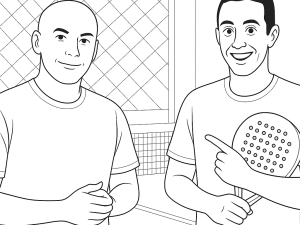
The4Set’s latest episode of Wings to Pro dives into a common dilemma for aspiring padel players: which side of the court should you play on? The creator, training under the guidance of legendary coach Miguel Sciorilli, explores this question by analyzing his own strengths and weaknesses on both the right and left sides.
According to Sciorilli, the decision isn’t just about technical ability. While the reviewer feels more confident with forehand shots on the right side, he finds himself more comfortable at the net on the backhand (left) side. Sciorilli emphasizes that a player’s comfort in both baseline defense and net play should influence their choice, but ultimately, a well-rounded player must be competent on both sides.
Sciorilli points out that defending in the corner with the backhand can be especially challenging, and if a player struggles there, it may be better to play on the right. However, at the net, more balls tend to come to the middle, often requiring a strong forehand volley. The takeaway: comfort and skill must be balanced, and regardless of side, players should work to improve their weaknesses.
Identifying and addressing weak shots with expert coaching
The focus of this session is clear: the creator wants to improve his two weakest shots—specifically, the backhand volley and defensive backhand from the baseline. Sciorilli’s approach is methodical, starting with a diagnosis of the technical and decision-making aspects of each stroke.
During baseline drills, the reviewer’s decision-making is praised—he reads the ball well and chooses the right moments to use the wall. However, the execution falls short, particularly when the ball drops low. Sciorilli identifies a recurring issue: the racket preparation is too high and too long, causing the player to arrive late and hit the ball inconsistently.
To address this, Sciorilli recommends:
- Preparing the racket low and short when expecting a low ball
- Keeping the racket close to the ground to meet the ball at the right height
- Transferring energy horizontally through the shot, rather than lifting the ball upwards
These adjustments help the creator achieve more consistent, controlled returns from the baseline, especially on low balls.
Technical corrections for the backhand volley and baseline defense
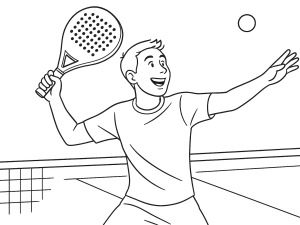
When working on the backhand volley, the reviewer struggles with preparation and follow-through. Sciorilli demonstrates that the ideal movement is short and compact, with the racket always visible in the player’s peripheral vision. Overly long preparations lead to mistimed shots and open racket faces, resulting in balls that fly too high or lack control.
Key technical corrections include:
- Maintaining a short, compact preparation for both volleys and groundstrokes
- Keeping the racket in the line of sight to improve timing and control
- Finishing the shot with a controlled, short follow-through, especially when aiming for depth or to create uncertainty for the opponent
Sciorilli also addresses footwork, encouraging the player to stay grounded and avoid stepping forward unnecessarily. This stability allows for better balance and more effective shot execution, particularly on fast balls that don’t reach the wall.
Understanding the importance of shot projection and ball trajectory
One of the most insightful moments comes when Sciorilli analyzes the trajectory of the reviewer’s shots. He notes that many balls follow a high, looping path (a “hyperbola”), which is not ideal for low, controlled defense or aggressive volleys. Instead, the goal should be to keep the ball trajectory low and direct, especially when playing from below net height.
To achieve this, Sciorilli recommends:
- Shortening the backswing and preparing the racket low
- Focusing on a horizontal push through the ball, rather than an upward lift
- Using a slight under-spin (backspin) when necessary, but avoiding excessive slicing that causes the ball to float
These adjustments not only improve consistency but also make the shots more effective in match situations, where quick, low balls are harder for opponents to attack.
Developing a complete padel player: versatility and mental approach
Throughout the session, Sciorilli stresses the importance of becoming a complete player. Specializing on one side is common, but true progress comes from being able to play both right and left, and from addressing weaknesses rather than just reinforcing strengths.
He also highlights the mental aspect: most advantages in padel tend to favor the left side (backhand), so players must be mentally prepared to handle pressure regardless of their preferred side. Improving weak shots not only enhances technical ability but also builds confidence and resilience on court.
Key takeaways and practical tips from the training session
- Preparation: Always prepare the racket low and short for defensive shots, especially when the ball is dropping near the ground.
- Footwork: Stay grounded and avoid unnecessary steps forward; stability improves shot accuracy.
- Shot execution: Focus on a horizontal push through the ball, keeping the trajectory low and direct.
- Volley technique: Keep the racket in your peripheral vision and use a compact motion for greater control.
- Versatility: Work on both forehand and backhand skills, and strive to be effective on both sides of the court.
- Mental approach: Embrace the challenge of improving weak shots and be open to adapting your technique based on feedback and self-analysis.
This session with Miguel Sciorilli provides a clear roadmap for any padel player looking to address their weaknesses and become more complete on the court. The4Set’s experience highlights the value of expert coaching and the importance of targeted, technical training in reaching the next level.