Aris Patiniotis: from Mar del Plata to the world stage of padel
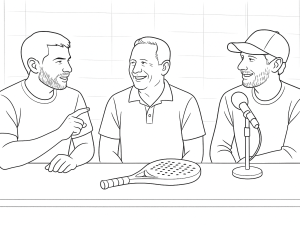
The interview with Aris Patiniotis on the Peter Consuegra channel offers a rare, in-depth look at the journey of a player currently ranked 63rd in Premier Padel and 93rd in the World Padel Tour. Born in Mar del Plata, Argentina, Aris’s story is marked by early promise, international moves, injuries, and a relentless drive to stay at the top of his sport. The creator highlights both the personal and professional sides of Aris, painting a portrait of a player who has faced adversity and found ways to reignite his passion for padel.
Early influences and the path to professional padel
Aris’s introduction to padel was almost accidental. His mother worked in a café at a local club in Mar del Plata, and he spent countless hours hitting balls against the wall. This environment exposed him to legends like Juan Martín Díaz and Cristian Gutiérrez, whose techniques he tried to emulate as a child. Early on, he was given opportunities by established players such as Damián Diez and Maru Lasaigues, who played key roles in his development and inspired him to pursue a professional career.
By his mid-teens, Aris was already competing in the Argentine circuit, and by 21, he made the significant move to Spain to further his career. Unlike many peers who relocated at 17 or 18, Aris’s later arrival meant adapting quickly to a new country and a higher level of competition.
Overcoming setbacks: injuries and mental resilience
One of the most revealing aspects of the interview is Aris’s candid discussion of setbacks. He recounts his worst sporting moment at the Buenos Aires World Padel Tour, where nerves and frustration led to a disastrous match and even a broken racket. But the most challenging period came with a serious hip injury that forced him to step away from the sport for nearly a year. The injury, rare in padel but more common in tennis, required months of searching for the right diagnosis and ultimately surgery.
During recovery, Aris struggled with frustration and self-doubt, especially as players he once beat began to surpass him. He credits working with a psychologist as a turning point, helping him manage emotions and rebuild his confidence. The creator emphasizes how Aris’s openness about mental health challenges is both refreshing and instructive for aspiring players.
Managing expectations and the pressure of being a prodigy
Aris acknowledges the weight of being labeled a “promise” of Argentine padel, especially given the towering achievements of compatriots like Juan Martín Díaz and Cristian Gutiérrez. He admits that expectations sometimes became overwhelming, particularly when living far from family and feeling pressure to win. The channel points out that this is a common struggle for young talents, and Aris’s advice to parents and coaches is to offer patience and support rather than adding pressure.
He also notes that the landscape of professional padel has changed, with more financial opportunities and support for players, though the emotional challenges remain significant.
Daily routines and the realities of a professional padel career
Aris’s daily life is a blend of discipline and routine. Mornings start with breakfast and catching up on sports news, followed by physical training and padel practice with his coaches and teammates. He values the camaraderie of post-training conversations and the importance of rest, including a “religious” siesta. Evenings are spent with his partner and their dog, enjoying simple pleasures like walks and series.
Financially, Aris notes that while he now lives off padel thanks to sponsors and results, the early years required juggling coaching jobs and tournament play. The creator highlights how this mirrors the experience of many professionals, where initial success and talent gradually lead to more stability and support.
Advice for aspiring padel players: humility, hard work, and the right environment
When asked for advice for newcomers, Aris stresses the importance of humility, hard work, and respect. He encourages young players to look up to role models like Rafael Nadal and Carlos Alcaraz for their attitude and dedication. Aris warns against arrogance and emphasizes that results should never be taken for granted. According to him, having a strong support network—family, friends, and coaches—is crucial for navigating both victories and defeats.
- Humility: Respect for others on and off the court
- Work ethic: Consistent training and self-improvement
- Support system: Surrounding oneself with positive influences
- Patience: Managing expectations and taking setbacks in stride
Role models and the value of good examples in padel
Aris highlights the importance of learning from top players, mentioning Agustín Tapia, Franco Stupaczuk, and Chingotto as examples of humility and competitiveness. He also praises Spanish stars like Ale Galán and Juan Lebrón for their professionalism and attitude. The creator notes that Aris’s perspective reinforces the idea that success in padel is as much about character as it is about talent.
Personal recommendations and signature shots
Beyond the court, Aris shares a few personal favorites. For motivation, he listens to a mix of Luis Miguel and Whitney Houston, while for inspiration during tough times, he recommends the book Nada es tan terrible by Rafael Santandreu. When asked which shot he would “steal” from another player, he chooses the víbora of Cristian Gutiérrez and the bajada de pared (wall drop shot), underlining his appreciation for technical mastery.
Key takeaways from Aris Patiniotis’s journey in padel
- Early exposure to top talent and supportive mentors shaped his career
- Injury and mental health challenges required resilience and adaptation
- Managing expectations and pressure is as important as technical skill
- Daily discipline, humility, and a strong support network are essential for longevity in professional padel
- Learning from both Argentine and Spanish role models enriches his approach to the sport
The channel’s interview with Aris Patiniotis offers a compelling look at the realities behind the rankings, highlighting the perseverance, adaptability, and values that define a modern padel professional.