Players address the ongoing professional padel crisis in public for the first time
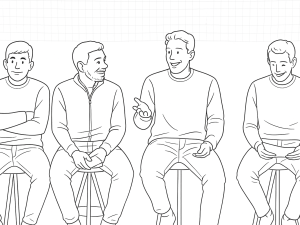
The professional padel world remains mired in uncertainty, but for the first time, players have publicly addressed the crisis. The channel the4Set reports that the Professional Padel Association (PPA) held a press conference in Madrid, marking a significant shift in the conflict with Premier Padel and the International Padel Federation (FIP). This press event allowed players to directly communicate their grievances and clarify their position amid ongoing disputes over tournament organization, rule changes, and governance.
Coinciding with the press conference, FIP and Premier Padel announced a reversal of one of their most controversial decisions: the tournament draw sizes for P1 and P2 events will revert to their 2024 formats starting with the Chile tournament. While this move addressed a key player demand, the channel notes that the official statements from FIP and Premier Padel still diverge from the players’ perspective, especially regarding the process and transparency of decision-making.
Key demands and concerns raised by the PPA board
During the press conference, the PPA board—led by Alex Ruiz (President), Paquito Navarro (Vice President), Federico Chingotto (Vocal), and Javier Diestro (Secretary)—outlined a series of core concerns. Their statement, read by Ruiz, emphasized that the current state of professional padel is “unsustainable” due to:
- Lack of clear and stable regulations: Players described the circuit as being subject to arbitrary decisions without legal security, putting their careers at risk.
- Unilateral rule changes: Examples included the sudden alteration of the points system for the 2025 season and changes to tournament entry deadlines, all enacted without prior notice or consultation.
- Conflicts of interest: The PPA highlighted that key FIP officials also hold executive positions in Premier Padel, undermining the impartiality expected from a governing body.
- Disproportionate conditions for participation: The revised ranking system and tournament restrictions were cited as unfairly limiting professional players’ opportunities.
- Absence of a written rulebook: The lack of a clear, codified set of rules for Premier Padel events has led to ongoing uncertainty and arbitrary decision-making.
These points were not simply administrative complaints; the players argued that the current environment threatens the integrity of competition and their rights as professional athletes. The PPA stated that, if necessary, they are prepared to pursue legal action to protect both the sport and their livelihoods.
Clarifying the narrative: accusations of boycotts and player autonomy
One of the most contentious issues addressed was the accusation—circulated by FIP and Premier Padel—that the PPA had orchestrated a boycott of certain tournaments, specifically the P2 events in Gijón and Cancún. The PPA categorically denied this claim, emphasizing that:
- Each player is free to decide independently which tournaments to enter.
- There was no directive from the PPA to skip events; in fact, at least 10 PPA members were registered for the Cancún event, disproving the notion of a coordinated boycott.
- Many players chose not to participate in certain tournaments due to organizational failures, unmet commitments, and growing legal uncertainty—not because of union pressure.
The board reiterated their support for all players’ individual decisions, whether to compete or abstain, and called for an end to what they described as harassment and misrepresentation by some FIP and Premier Padel officials.
Players’ priorities: regulation, stability, and a future for the sport
Throughout the press conference, the PPA leadership stressed that their demands are not financially motivated. Instead, their primary goal is the establishment of a transparent, fair, and stable regulatory framework for professional padel. They argued that only with clear rules and impartial governance can the sport develop sustainably and attract new talent.
The PPA also pointed out that the association itself was formed at the request of Premier Padel and FIP, who wanted a strong players’ body to help shape the sport’s future. Funds received by the association, they clarified, are used to cover legal and organizational expenses, not for personal gain.
Reflecting on the original contract signed between the players and Premier Padel, the board admitted it was rushed and contained numerous flaws, the result of a highly pressured situation. Now, with more experience and legal counsel, the players are seeking a more robust and lasting agreement.
Calls for dialogue and a new model for professional padel
The PPA concluded with a call for genuine dialogue. They expressed a desire to sit down with Premier Padel and FIP to establish a solid foundation for the sport, drawing inspiration from other professional circuits in tennis, football, and badminton. The players made it clear that, while padel shares some similarities with other racket sports, it requires its own tailored governance and identity.
Ultimately, the players’ message was unified: they want to focus on competing, not conflict. Their hope is for a future where professional padel is governed by clear rules, impartial management, and mutual respect between all stakeholders.
- Key player demands: Clear regulations, impartial governance, stable competition structure, and respect for player autonomy.
- Main grievances: Unilateral rule changes, conflicts of interest, lack of transparency, and accusations of coordinated boycotts.
- Next steps: Continued dialogue, potential legal action, and a push for a new, sustainable model for professional padel.