Design and construction of the Head One Ultralight
The reviewer from the4Set highlights the Head One Ultralight as the world’s lightest adult padel racket, weighing in at just 300 grams. This is a significant departure from traditional padel rackets, which typically weigh much more. The racket features a 38mm frame, confirming its status as an adult model, as junior rackets usually have thinner profiles. The design is described as minimalist and futuristic, available in both black and white versions—though the only difference between them is color.
One of the most striking aspects is the use of 12K carbon fiber for the face, similar to the Head Extreme One. However, the channel points out that the Ultralight’s carbon weave is less dense, resulting in a less stiff and more forgiving feel compared to the tighter, stiffer weave of the Extreme One. This difference in carbon density not only affects the racket’s stiffness but also its sound and overall playability.
- Weight: 300g (black version: 299g, white version: 306g)
- Frame thickness: 38mm
- Face material: 12K carbon fiber (less dense weave)
- Grip length: 13.5 cm (one of the longest on the market)
- Shape: Round
- Balance: 27 cm
Unique features: single-hole design and rough surface
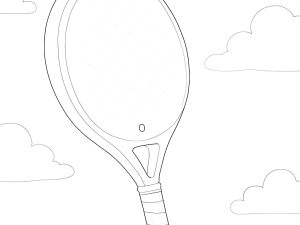
A standout innovation in the Head One Ultralight is its single-hole design. While most rackets have multiple holes to aid in spin and aerodynamics, this model features just one, the minimum allowed by regulations (with a 9mm diameter). The reviewer explains that this design dramatically increases durability, as rackets often break between holes where the structure is weakest. By minimizing the number of holes, Head has created a racket that is “practically unbreakable.”
However, the lack of holes presents challenges for generating spin. To compensate, the Ultralight uses a sandy rough surface to help grip the ball. The reviewer notes that this texture is initially effective, allowing players to apply spin despite the absence of holes. Over time, though, the sandy finish tends to wear down, making it harder to generate spin as the racket ages. In comparison, the Extreme One uses a 3D roughness, which is less effective at first but more durable over time.
Comparison with the Head Extreme One and other rackets
The channel draws several comparisons between the Head One Ultralight and the Head Extreme One. Both rackets share the 12K carbon construction and single-hole design, but the Extreme One is stiffer due to its denser carbon weave and weighs significantly more at 340 grams. The Ultralight, at 300 grams, is much easier to maneuver, especially for beginners or players with physical limitations.
For context, the reviewer recalls their first racket—a Head model used by Fernando Belasteguín—which weighed 371 grams and was very technical, even breaking between the holes. This experience underscores the Ultralight’s suitability for less experienced players or those seeking a more forgiving, durable option.
On-court performance: agility, comfort, and limitations
Testing the Ultralight on court, the reviewer emphasizes its exceptional agility. The low weight and 27 cm balance point make it extremely easy to move, reducing fatigue and allowing players to react quickly in defense. The large sweet spot means that precision is less critical, which is ideal for beginners or those still developing their technique.
In defensive play, the racket is described as very comfortable, with good ball output at lower speeds. However, when attempting to hit with more power, the Ultralight absorbs some of the force, resulting in less speed and aggression on the ball. This is consistent with the physics principle that force equals mass times acceleration—lighter rackets simply can’t deliver the same power as heavier ones if swung at the same speed.
During volleys, the agility again stands out, but offensive volleys lack the punch of heavier rackets. The sandy roughness initially helps with spin, but as noted earlier, this advantage diminishes as the surface wears down. For bandejas and víboras, the lightness is a major asset, making preparation effortless and reducing the risk of fatigue, though the shots themselves are less aggressive.
When it comes to smashes, the Ultralight falls short compared to the Extreme One, which consistently delivers more power and distance. The reviewer’s tests confirm that while the Ultralight is easy to swing, it simply doesn’t match the output of its heavier sibling.
Target audience and value for money
The reviewer is clear that the Head One Ultralight is designed primarily for beginner players or those who prioritize comfort and injury prevention. Its light weight and large sweet spot make it especially suitable for people new to padel, coaches who spend long hours on court, or players with elbow or shoulder issues. The inclusion of a gel butt cap further enhances comfort by reducing vibrations.
Despite its beginner-friendly features, the Ultralight comes with a premium price tag of €180 (with a discount code). The reviewer notes that this is not cheap for a starter racket, but justifies the cost by highlighting the innovative design and advanced technologies involved.
Key strengths and weaknesses summarized
- Lightest adult padel racket on the market (300g)
- Extremely agile and comfortable, reducing fatigue
- Large sweet spot and forgiving round shape
- Durable single-hole design minimizes breakage
- Effective spin initially thanks to sandy roughness
- Limited power, especially on smashes and offensive volleys
- Spin potential decreases as surface wears down
- Premium price for a beginner-oriented racket
Final evaluation: who should consider the Head One Ultralight?
The channel concludes that the Head One Ultralight is a bold innovation, offering unmatched agility and comfort for beginners and those needing a lightweight, durable option. While it lacks the power and lasting spin capabilities of heavier, more advanced rackets, its unique features make it a compelling choice for specific player profiles. For anyone seeking a racket that minimizes fatigue and risk of injury—without sacrificing too much in terms of playability—the Ultralight is a standout in the current padel market.