Comparing the adidas metalbone 3.3 and metalbone hrd+ rackets
The reviewer from the4Set channel sits down with Ale Galán to explore the differences between his two main rackets: the adidas Metalbone 3.3 and the adidas Metalbone HRD+. Both rackets are described as powerful options on the court, but Galán highlights key distinctions that influence his choice depending on match conditions.
The primary difference lies in the core material—the HRD+ features a harder rubber, while the Metalbone 3.3 uses a softer one. Additionally, the design elements, such as color and graphics, help Galán quickly identify each racket in his bag. This is especially useful when he needs to adapt to varying temperatures or court speeds throughout the season.
For instance, in colder conditions or slower courts, Galán tends to favor the Metalbone 3.3 for its softer feel and improved control. On faster courts, like those found in indoor venues with higher temperatures, he often switches to the HRD+ to maximize power during smashes and blocking situations.
Key specifications and customization options for galán’s rackets
Galán is meticulous about his racket setup, adjusting both the weight and balance to suit his playing style and the demands of each match. He takes full advantage of the Weight & Balance System featured in the Metalbone series, which allows for fine-tuning by adding or removing small weights.
- Weight (without added weights): 375–380g (sometimes up to 385g)
- Core: Hard rubber (HRD+) or soft rubber (Metalbone 3.3)
- Adjustable balance: Customizable via removable weights
Galán explains that he typically removes the additional weights to shift the balance higher up the racket. This adjustment increases the head weight, making it easier for him to generate power during offensive shots, particularly smashes. However, he notes that for amateur players, keeping the weight closer to the handle can provide greater control and maneuverability, suggesting that each player should experiment to find their ideal setup.
Spin Blade technology and design features
Both the Metalbone 3.3 and HRD+ incorporate Spin Blade technology, which now extends all the way to the edge of the racket face. Galán points out that while most shots are struck with the center of the racket, the extended Spin Blade surface can offer extra grip on the ball during off-center hits or drop shots. This design tweak ensures that even minor mistakes are less punishing, giving players a bit more margin for error.
For Galán, these small details contribute to the overall versatility and adaptability of the Metalbone line, making it suitable for a range of playing conditions and styles.
Personal grip preferences and overgrip technique
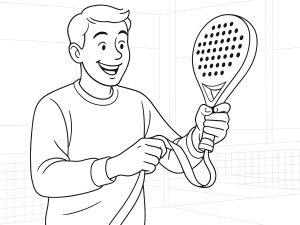
One of the most revealing aspects of the interview is Galán’s approach to grip customization. He removes the factory-installed overgrip and replaces it with two overgrips of his own choosing. According to Galán, this setup results in a slightly thinner and more consistent feel compared to layering an additional grip over the original.
He starts wrapping the overgrip from the side where the wrist rope is positioned, intentionally making the area under his little finger a bit thicker. This subtle adjustment helps prevent the racket from slipping during play. Galán also prefers to overlap the grip just enough to avoid bumps or unevenness, ensuring a smooth and homogeneous surface. He avoids stretching the grip too tightly, as a softer, more cushioned feel helps maintain a secure hold without discomfort.
For players who frequently change their grips, Galán’s method offers a practical approach to achieving both comfort and consistency, even if the result isn’t always the most aesthetically pleasing.
Choosing the right setup for different conditions
Galán’s decision-making process before tournaments involves careful consideration of both the court environment and his own experience from previous years. He usually brings both the Metalbone 3.3 and HRD+ to events, making the final choice after testing the court’s speed and bounce during practice sessions.
For example, in Milan, where temperatures can drop to 2ºC, he initially leans toward the softer Metalbone 3.3. However, if the indoor court proves to be exceptionally fast, as it did in the previous year, he may opt for the HRD+ to take advantage of its extra power. This flexibility is a testament to the Metalbone series’ adaptability, allowing top players like Galán to fine-tune their gear for optimal performance in any scenario.
Summary of galán’s preferred racket setup and advice for amateurs
To recap, Galán’s ideal racket configuration is:
- Model: adidas Metalbone 3.3 or Metalbone HRD+, depending on conditions
- Weight: 375–380g (occasionally up to 385g)
- Balance: Higher, by removing additional weights
- Grip: Two overgrips, with the original removed
He emphasizes that while his preferences are tailored to his aggressive style and professional needs, amateur players may benefit from experimenting with different weight and balance settings. Keeping the weight closer to the handle can enhance control, while a higher balance favors power. The versatility of the Metalbone series ensures that players at all levels can find a setup that matches their game.
Ratings and final impressions from the4set
The4Set channel does not provide a formal numerical rating in this review, but the feedback from both the reviewer and Galán is overwhelmingly positive regarding the adidas Metalbone 3.3 and HRD+. The standout features are the customizable weight system, the extended Spin Blade technology, and the thoughtful grip adjustments that allow for a highly personalized playing experience.
For players seeking a professional-grade padel racket with maximum adaptability, the Metalbone series stands out as a top choice, validated by one of the sport’s elite players.